Monday, October 10, 2011

Outrage from Iceland


Outrage, Arnaldur Indridason's newly translated Icelandic crime novel, is a departure from the series featuring the dour detective Erlendur, while still being part of the series. Erlendur has gone walkabout, in the fjords where his brother was lost, his body never found, in a storm many years before (the event that has marked the rest of Erlendur's life).

In his absence, Elínborg, Erlendur's female colleague, steps to the foreground of the series (Sigurdur Óli, their other colleague, also features in the book, but in a smaller role than Elínborg). Crime writers have often shifted focus from one running character to another, but rarely has it made such a dramatic difference in the mood of a book: Elínborg is not exactly cheerful, but she lacks Erlendur's gloomy outlook, and her family (all of them alive, not so common among fictional detectives) is constantly in her mind.

The case at hand involves rape and roofies (the date rape drug). In a preface we see a young man on the prowl in a club. But when the police arrive at a crime scene (spoiler alert) in the first chapter, it's a man's body that's found, not a woman's, and he's wearing the T-shirt that the predatory male's potential victim was wearing in the preface. In addition to a difficult case, Elínborg is dealing with (in her own family) a hostile teenage son who's a bad influence on a younger son, an exceptionally intelligent daughter, and a foster son who has abandoned the family that took him in.

Elínborg's passion for cooking (noted in earlier books in the series) is also a strong thread in the story, not only in her own home (where she seldom has time to exercise her talent) but also in the case (where subtle odors play a major role). As in the books featuring Erlendur, the shift away from traditional Icelandic culture to a more homogenized modern one is an important theme, but the shift from Erlendur's point of view to Elínborg's provides a less gloomy and reactionary perspective on the phenomenon.

The subject of rape is investigated in some depth, with special emphasis in the damage that the crime does to the victim's life and mental state. Elínborg claims no special insight because she's a woman, but perhaps the author chose to bring her to the forefront in this case because of her more possibly more sympathetic attitude toward the victims. Yet she does not hesitate to pursue the possibility that the victim of the rape at the center of the story may (when she finally finds her) be the perpetrator of the murder. Other actual and potential victims of rape and murder are offered, giving shades of emphasis about the crime, the victims, and the attacker.

It's always puzzled me that Arnaldur (Icelanders actually go by their first names rather than patronymics, a fact that gives the stories an interestingly informal quality) emphasizes Erlendur to the detriment of his other, quite interesting, police colleagues: perhaps he was thinking the same thing, since Elînborg, when given free rein to dominate the book, is indeed quite interesting, fully the equal of other female detectives in Scandinavian fiction (by male as well as female authors). While I'm curious to know what is happening with Erlendur (there a very few clues, none of them very positive, in Outrage), I'd also be glad to read more about Elínborg in the future (Sigurdur Óli seems not quite so interesting: a more impulsive than intelligent detective).

Outrage follows the pattern of the subgenre of police procedurals, though perhpaps less completely than in Dregs, reviewed here recently. There is a mystery at the heart of Outrage for which some clues are supplied to the reader and the detectives, and we may guess at some aspects of the facts of the case (some of which will be upturned by the development of the tale), but still Elînborg's skill is supplemented by her unique insight perhaps more than is the case with William Wisting of Dregs, whose talent is in organizing the investigation and remaining open to new facts rather than in any special insight. Just goes to show that two excellent books in the same sub-set of crime fiction can demonstrate quite different approaches. I hope that it won't be too long before we get another installment in this series, no matter which detective takes the main role.

Thursday, October 06, 2011

Dregs: Norwegian police procedural


Dregs, by Norwegian crime writer Jørn Lier Horst, is a first-class police procedural. Horst has had some time to perfect his craft: this is apparently the 6th in the series featuring Detective William Wisting, and his 8th novel, but the first to be translated into English. Though it's always preferable to start a series with the first book (to my mind), Horst does a good job of keeping the reader informed about the characters' past, so we English-speakers won't get lost.

The book is set in Stavern, in southeast Norway (near the city of Larvik, where Horst is himself a policeman). Wisting is called to the shore where a left-foot running shoe has washed ashore, with the foot still inside. This is the second recent Scandinavian crime novel to feature a foot-washing-ashore (Swedish writer Kjell Eriksson's The Hand That Trembles arrived a bit earlier), but apart from that and the fact that both are police procedurals, the books don't have a lot in common. Horst's book is a bit more straightforward, while Eriksson's ranges quite far in time and geography. Plus in Horst's book, the reader sees only a few brief scenes that either Wisting or his daughter Line (a journalist) don't see (there aren't scenes from the viewpoint of the killer or victims).

In Dregs, too, more shoes come washing ashore, all for the left foot (which is also present). Wisting and his team quickly align the case with the disappearances of a group of old men and two women, but no one can figure out what's going on, or why the missing people's feet (rather than whole bodies) keep showing up. Simultaneously, Line is in town (she normally works in Oslo), working on a feature article about released prisoners. One in particular has captured her interest, and eventually his story becomes intertwined in the investigation—but not in an obvious way (nothing about the story is obvious).

Wisting is a very interesting character (and the novel is more character-driven than plot-driven, unlike a couple of other Scandinavian crime novels I've read recently). Wisting is feeling his age and waiting for results from a doctor's visit. Like many other fictional detectives, there's a tragedy in his past (the death of his wife and Line's mother), but unlike many others, he has partly moved on and is now in a positive relationship with a woman in the town. Line, as well, is in a relationship, but one that her father is not entirely happy with.

All in all, it's a very realistic story, focused on the characters and the slow progress through the investigation (leading through spirals of information, going through the facts again and again from various newly discovered angles—as in any good police procedural). It's not a puzzle mystery, since neither the reader nor the police are in possession of the information necessary to solve the case until well into the story. The police procedural format is more satisfying to me than the puzzle mystery, for reasons I don't fully understand. But the pleasures of the procedural are very much in evidence in Dregs.

The title works very well, too—various shades of meaning of "dregs" surface at various points. Horst is one of the best writers of the current crop (a new Scandinavian crime wave in English translation): nothing like the books of Stieg Larsson, and actually not much like those of Henning Mankell either (though they share the procedural format). Horst's style is low-key, but very involving, vivid, and persuasive.

Wednesday, September 28, 2011

Kate Atkinson, Started Early, Took My Dog


I'm not sure if it has already run in the U.K., but the TV series based on Kate Atkinson's Jackson Brodie novels is about to be shown on public television in the U.S. And I also don't know if there are plans to film Atkinson's latest (and so I've heard, last, for a while at least) Brodie novel, Started Early, Took My Dog. It's hard for me to imagine a film or TV show based on the book, but then it's hard for me to imagine any film adequately dealing with Atkinson's fictional universe.

Started Early, Took My Dog is full of parellelisms and coincidences, in a story based in Yorkshire and mostly in Leeds. There are parallels everywhere, within the "present-day" plot and between that and the flashback plot (set in the mid-'70s, with many references to the Yorkshire ripper, whose spree was just starting. But this is no thriller, and no Red Riding either, to cite that other Yorkshire crime novel/series that is bound to come up in any discussion of Started Early, Took My Dog. Atkinson's novel is instead a book of dazzling surfaces and profound depths, which constantly (through those parallels and the brilliant writing, calling attention to its fictional nature.

There are several kidnappings, beginning with a retired policewoman abruptly deciding to "buy" a child from a prostitute/junkie who is abusing the kid. Jackson, for his part, takes a small dog away from a man who is abusing it, establishing comic (and not so comic) parallels from the beginning. There's also kidnapping the the '70s plot, in an incident that provide much of the plot and links most of the characters. A third main character is an aging actress, succumbing to dementia, whose links to the kidnappings are tenuous until the very end.

Atkinson has a talent for combining lively writing with careful characterizations. A reader not only knows these characters very well, but ultimately cares about them. And Atkinson doesn't abuse the reader's concern (I won't explain for fear of revealing too much plot). The various characters and the intertwining plots (through the two eras of the story) hold the reader's interest all along, and in the last half of the book the pace picks up with new twists on various kinds of chases, retiring gangsters, police corruption, speeding trains (a parallel to an earlier Brodie book), TV cop shows, and damsels in distress. She also provides a child character who is affecting without being cloying, true but also comic: both a literary device necessary for the story and a lively element of the story (though she doesn't say much). Child characters are difficult (not to mention that dogs are a crime fiction cliche), but Atkinson pulls off these elements of the story as effectively as the "bigger" aspects of the novel.

One element tying the whole Brodie series together is Jackson's monologues with Julia, a character in the series from the beginning, who now serves as a kind of chorus as well as an idiosyncratic character in her own right. Atkinson wisely anchors Brodie's melancholy with Julia's flightiness: we need them both, even when Julia isn't really part of the story. Started Early, Took My Dog isn't perhaps for every crime reader, but it does reinforce a reader's convicion that genre isn't everything. Atkinson gives us the elements of the crime genre, sometimes turned inside out, but without ever condescending to the genre itself. It's a structure, much like all those parallels, that enables a good story and in this case a very good book.

Monday, September 26, 2011

Stefan Tegenfalk, Anger Mode


Stefan Tegenfalk's Anger Mode (recently published under the new Nordic Noir imprint in translation by David Evans) is sort of like a combination of Jussi Adler-Olsen's Danish crime novel The Keeper of Lost Causes (aka Mercy) and the novels of Swedish crime/thriller writer Leif GW Persson. Like The Keeper of Lost Causes, Anger Mode starts with a horrific car crash and proceeds according to the revenge motive of a survivor. Like Persson's novels, Anger Mode shifts from one set of characters to another and plays off the regular police against Sápo, the security police (and as in Persson's work and for that matter Stieg Larsson's, Sápo is both stupid--or at least so narrowly focused that they can't see the truth--and ruthless).

Anger Mode also has, like Adler-Olsson's novel, a detective who relies on unorthodox methods and a character from Syria whose name is a running joke (the Danish novel features a mysterious police contractor named Hafez el-Assad and the Swedish one has a criminal informant named Omar Khayyam). But like the most recently translated of Persson's novels, the detective has a young female partner who both struggles against and disproves the sexism of the police force.

The strength of Anger Mode is the plotting, which is devious and avoids the obvious (right to the end, which points to a pair of sequels). The writing (or the translation, and perhaps some Swedish speakers can help us here) is sometimes a bit wooden, especially in the dialogue (sometimes stiff and over-explaining rather than natural). The diverse characters have a bit more life and considerably more backstory than Adler-Olsson's, their individuality indicated by the narrator's comments but only revealed fully more slowly, by their actions. There's one character, a villain, whose total package of personality traits seems a bit strained to me: one moment he's an ideologue, the next a scheming embodiment of greed: it's not impossible that those elements could be combined in one character, but the shift from one to the other is a bit abrupt (and perhaps the two strains will join together later in the trilogy).

Anger Mode is long-ish (about 470 pages) but reads quickly (except for some of those turgid dialogue passages, and skimming over those speeds things up, after all). It's a worthwhile addition to the translations of the Nordic crime wave, though not among my top-ranked novels (and perhaps those who rejected my previous negative comments about Adler-Olsson will find even more to like in Tegenfalk's writing than I did). I'm simultaneously reading (or rather listinening to) Kate Atkinson's Started Early, Took My Dog, which is very well written and contains totally natural, believable dialogue--but in which things happen glacially rather than rapidly. I don't fault either Tegenfalk or Atkinson for their different aims and approaches, but perhaps there are some writers out there who combine their virtues?

Wednesday, September 21, 2011

Alan Glynn, Bloodland


The sequel (sort of) to Alan Glynn's Winterland is set for release by Picador in the U.S. in January (I think it's already out in the U.K.). It's more of a thriller than a straight crime novel, but the thriller aspect is quite different from the usual novel of that genre. There's a lot of tension and plenty of threat, but most of the story takes place in the ordinary streets, apartments, hotels, and boardrooms of today's society.

The link to Winterland is Larry Bolger, now the former prime minister (Taoiseach) of Ireland, and not comfortable being out of the loop of power brokers who had put him into power in the first place. There also some shadowy American plutocrats that played a role in the previous novel and loom even larger here.

The young, unemployed journalist who is the closest thing to a central character in Bloodland summarizes the story at various points as being about a helicopter crash, a UN inspector (dead), an actress (dead), a village massacre, and a presidential candidate. There's also scandal, despair, PTSD, burnout, debts incurred and called in, and several unhappy families. Other than the journalist, Jimmy Gilroy, and Larry Bolger, we get the story from the point of view of a couple of those American plutocrats (one of them the brother of that presidential candidate), some of Bolger's former associates, an Irish developer ruined by the collapse of the Celtic tiger.

Jimmy, who has managed to get an assignment to write the actress's biography, is steered away from the project and toward a bio of Bolger, but in the process he snags onto a thread that links the massacre, the crash, the plutocrats (American and Irish), and some very ruthless people who work for a private security company. Jimmy is a likable innocent caught up in forces way beyond his control, and ends up in New York with everyone on his tail. It takes a while to sort out the cast of characters, but Glynn gradually gives each of them a full portrait through their inner and outer dialogues.

The tone is fast and lively, but not frenetic. It's quite enjoyable to see the plotlines converge, and the characters are fully alive (even the ones moving swiftly toward their deaths). The major difference between Winterland and Bloodland is that, beyond the developers, politicians, power brokers, and moneymen that the two stories share, Winterland also involved gangsters and a woman determined to find the truth about her murdered brother. Jimmy doesn't quite have the personal motivation that she did, at least not until his own life is at stake, and the gangsters anchored Winterland in a gritty urban milieu, in contrast to the boardrooms. Bloodland is anchored instead in a fast-sinking middle class watching jobs and investments and businesses disappear before their eyes (again in contrast to the denizens of the boardrooms).

It's interesting to see Glynn make such a substantial shift between two novels that are in other ways closely related. He's showing the common ground between crime fiction and thrillers, and twisting both genres into his own particular style. The cover of the U.S. edition makes it look like this is a New York story, and it partly is. But at its heart is an Irish story, but anchored in new global economic, political, and social realities. Among the very talented crop of Irish crime writers on the scene today, Glynn has the most global outlook. He's also the author of a semi-scifi thriller made recently into the movie Limitless, but if you're not into quasi-Blade Runner/Phillip K. Dick tales, don't let that association put you off Winterland and Bloodland. They're very vivid stories of today's low and high crimes, and very much tied to a base in contemporary Ireland (while also believably portraying American, Italian, and African milieux).

Tuesday, September 13, 2011

Jussi Adler-Olsen's Danish crime fiction


An Engish translation of Jussi Adler-Olsen's Danish crime novel arrived in the U.K. last spring under the title Mercy and is about to arrive in the U.S. with the title The Keeper of Lost Causes. The U.K. title (and cover) suggest a major plot line concerning the kidnapping and imprisonment of a woman who is a politician and the caretaker of a disabled brother. The U.S cover mimics the U.S. covers of the Tattoo trilogy, and otherwise suggests the plot obliquely. Neither, however, does much to suggest the major characteristics of this book and the series which it inaugurates, which deal with a "cold case" squad in Copenhagen called Department Q.

Department Q is started partly as a means of getting a troublesome detective, Carl Mørck, out of the way, and partly to leech some extra cash out of the government (a substantial part of which will not actually to to Department Q, an ongoing element of the story). Mørck has been wounded in an assault that killed another detective and crippled a third, and Mørck might be expected to have some "PTSD" and guilt feelings: but except for a brief moment in an encounter with a therapist (whom the detective visits mostly because she's attractive), Mørck is mostly a straightforward egotist, loudmouth, obnoxious, and effective policeman.

That "straightforward" in the previous sentence indicates a certain lack of enthusiasm on my part. Neither Mørck nor his erstwhile assistant (whose very name, Haffez el-Assad, is a running joke) are really fleshed out. Merete, the kidnapped woman, is a little more substantial, but her story is mostly given in the extreme situation of her imprisonment, so that what we see of her is mostly alternating determination and despair. Her determination, in particular, is very interesting (given the usual use of the kidnapped woman in crime fiction), and we have her life story in some detail, but for me she remained, like the detective, a character more on paper than in the flesh.

The story is moved forward mostly in narration (partly from inside Mørck's head) rather than dialogue. And up to the end, it's mostly Merete's misery and Carl's gradual progress in the investigation (aided very substantially by his mysterious assistant), as well as in his occasional work on the homicide squad's other cases (and the other cops are mostly foils for Mørck (he's the only one who seems capable of actually detecting anything). And the villains, as they are gradually revealed in the second half of the book, seem inadequately motivated, veering from mad science to petty vindictiveness without revealing much else.

I don't mean to say that this is a bad book. It's just not as three-dimensional as another recent Danish crime novel, The Boy in the Suitcase, or as the best of the Scandinavian crime wave (Theorin, as just one example). I don't know what Mørck's name means in Danish, but the "murk" of the English homonym suggests something of the character: he seems to be mostly lazy, though more capable than his colleagues; even his relationship to his estranged wife seems perfunctory, as if he can't be bothered to be much more than mildly annoyed with her. And Assad, as he's mostly called, is almost cartoon-like, revealing hidden talents at every turn but always falling back into a jokey "immigrant" style of speech and character.

The Keeper of Lost Causes reminded me a bit of another book (which I haven't reviewed yet) that disappointed me, the much shorter Fatale, by Jean-Patrick Manchette. All of Manchette's translated novels are a bit flat in tone, taking a philosophical, noir approach rather than a fleshy, full-bodied approach to crime fiction. But I liked Three to Kill and Prone Gunman, whereas I found Fatale a bit tedious, the characters flat and not rounded. It's a "thesis" book rather than a full story, to me. I have been listening to an audio book of Ian Rankin's The Complaints while reading Fatale on paper and The Keeper of Lost Causes as a pdf (from Netgalley), and though the Complaints may not be Rankin's best book, the characters are certainly fully fleshed out, and the story natural and not forced. Perhaps the other two novels suffered from comparison to the vivid quality of Rankin's prose.

I'm happy to be contradicted, if others got more from the book: Adler-Olsen is well respected in Denmark and has been well reviewed around the world. Perhaps the Department Q series will grow on me. In the meantime, I've started Alan Glynn's Bloodland, which is certainly lively and engaging so far.

Monday, September 12, 2011

Leif GW Persson and Swedish noir '78–'84


Bo Widerberg's 1984 film The Man from Mallorca is taken from Leif GW Persson's 1978 novel Grisfesten (Pig Party or Pig Roast), which seems to be the first appearance of the central characters from several later novels, Detectives Jarnebring and Johansson (who were at that point in their careers working in Vice). Several other characters who are at least referred to in later books also put in an appearance (and you may recognize Sven Wollter as Jarnebring in the photo pasted in here, from more recent crime fiction TV series, if not Tomas von Brömssen as Johansson).

As a movie, The Man from Mallorca is very close in style to Widerberg's The Man on the Roof, taken from a Sjöwall/Wahlöö novel (The Abominable Man). The story is presented without commentary, in short scenes that are sometimes confusing until the story starts to come together about halfway through (and the style is in the end very effective).

The story concerns a post office robbery by a clever and capable thief: Jarnebring and Johansson ar ethe first on the scene and, having let the thief get away, they become involved in the investigation. The thief proves to be not only ruthless but well-connected. A persistent theme in Persson's later books is already in evidence: the conflicting interests of the police and the security police (whose methods and aims are a constant source of tension, criticism, and even comedy for Persson). The thief's costume is also quite funny (I'm not going to explain--not exactly a plot spoiler, but...), and the fact that the robbery takes place during a Lucia celebration gives a very Swedish slant to the scenes (not quite the Swedish Christmas of Bergman's Fanny & Alexander, but close).

Viewers may find the ending of the movie rather cynical, though it is absolutely consistent with Widerberg's style and Persson's story (don't know if the book's ending is the same, since it hasn't been translated—though if I could find a copy my Swedish is probably just about adequate to tell if the ending is substantially different--anyone who's read it is invited to step in with a comment).

It's interesting that a movie from an earlier Persson novel has been available with English subtitles for years, while Persson's writing is only now appearing in English--possibly Widerberg's post-Elvira Madigan international rep is the reason... In any case, it's quite a good movie, and an interesting insight into the characters' early careers (with interesting ironies for those who've read about their later careers).

P.S., did you recognize Sven Wollter from his recent TV-detective role?

Wednesday, September 07, 2011

Leif GW Persson: Another Time, Another Life


Another Time, Another Life, by Leif GW Persson, is scheduled to be published in the U.S. in March, 2012 (by Pantheon, in translation by Paul Norlen). The novel is a sequel to last year’s Between Summer's Longing and Winter's End, and both have the subtitle, “The Story of a Crime,” which inevitably suggests the great Martin Beck series by Maj Sjöwall and Per Wahlöö (especially in the Swedish context). But Persson is doing something different from S&W, at least in these first two volumes of what is said to be a trilogy: he is dissecting a particular crime with national and international consequences, brought into the perspective of the daily routines of the investigating police (who are portrayed warts and all). S&W were focused more closely on the lives of ordinary citizens stressed by the tensions of the welfare state of the 1970s in Sweden. But Persson's writing shifts back and forth between an almost documentary style and a fictional form, drawing the reader along seamlessly through story and history.

The earlier book led up to the assassination of Olaf Palme, and this newly translated one begins with the bombing of the German embassy in Stockholm in 1975 by factions of the German radical movement that’s generally lumped under the heading “Baader Meinhof Gang.” There are several jumps forward from the year of the bombing to the late ‘80s (and the fall of the Soviet bloc) to the late ‘90s, when a murder in the ‘80s comes into focus with the embassy bombing. Along the way, Persson depicts the security establishment of Sweden is less-than-flattering terms, while also repeating to the point of comedy the policemen’s assessment of one another as a “real policeman” and their work as “real police work.” The same pattern is to be found in the earlier book, as well.

One of the interesting things about reading these two books is the way they interlace the history of modern Sweden and the lives of the characters who appear in both.

But in the second book there is a new twist. Many readers have remarked on the sexism of Between Summer’s Longing and Winter’s End, with some wondering whether Persson was portraying accurately the macho attitudes of the police of the time or was perhaps himself betraying his own attitudes. The new book doesn’t answer that latter question, but here he’s playing with the sexism/machoism in a blatant way. Jarnebring, the lead detective of the first sections of the book keeps referring to his new female partner but both he and the narrator refuse to give her a name. She turns out to hold her own, though, forcing them to recognize her as an individual. And soon after, a contrast is drawn with an old-line male pathologist and a new female one who is far more knowledgeable and professional than the male (though one running character in Persson’s books, Detective Bäckström, refuses her conclusions and goes to the old man for confirmation of his own prejudices about the victim.

Those prejudices (and Bäckström’s other sins) come back again in an amusing way in the last pages of the book, while the story has shifted to a squad made up of Jarnebring’s friend and now superior officer (Johannson) and three hyper-competent female detectives. But neither the narrator nor the police environment has suddenly become enlightened on the topic of gender: the police and others continue to utter disparaging remarks about women in particular and specific female characters as well. If the sexism hasn’t disappeared, it’s at least interesting (and often funny) when thrown into the stark contrast that Persson accomplishes in Another Time, Another Life.

And Another Time is indeed an accomplished work of crime fiction, holding my interest easily through it’s 400-plus pages and offering a subtle and complex payoff at the end. Persson is, we’re told, a leading expert on crime in Sweden and a criminal profiler much in demand. He has experience and authority in his portrait of the police (in a way that begs comparison with the past master of the police story in the U.S., fictional and documentary, Joseph Wambaugh--also known for the comic elements of his books). In addition to the trilogy, it looks like all of his books recycle the characters in the two translated books, leading me wish for more translations beyond those apparently planned at the moment (at least one film based on his books, The Man from Mallorca, had international distribution some years ago).

As a point of disclosure but also an explanation of the cover pasted into this review, I received an advance galley of Another Time, Another Life from Pantheon, its U.S. publisher: the galley was bound in a plain yellow wrapper, but inside was a possible cover that more or less matches the style of the U.S. cover of Between Summer's Longing and Winter's End, but I haven’t been able to find an image of it anywhere--hence the Swedish one that shows up above--which I actually prefer to the U.S. covers anyway because it ties the story to the historical event (without being quite as explicit about the violence of the event as another cover published for the book in Sweden).

Wednesday, August 31, 2011

The Rage, by Gene Kerrigan


Irish crime writing was already booming before the economic bust in that country, but the collapse seems to be supplying even richer material for the writers there. The gritty realism of Gene Kerrigan seems to have anticipated bad times, as if his style of noir has only now found its proper environment.

His new novel, The Rage, is a very good book that very effectively evokes the decline in the Irish economy and sense of national identity. Bob Tidey is a detective who is determined to the right thing for the victims and their families, and his efforts lead him into a professional and personal quagmire. Vincent Naylor, recently released from prison, is a hard man who's trying to control his impulses, not to go straight but to make the risks of his actions match his possible gains, especially in the complex and daring robbery he has in mind.

The strength of Kerrigan's writing is that the cop and the thug, not to mention Tidey's obstructive bosses and Naylor's criminal associates, are fully human. Tidey struggles with his duty and his conscience and his relationship with his former wife. Naylor struggles with his anger, his impulsive older brother, and his sense of justice (which is fueled by the rage of the book's title). Naylor seems on sounder footing in his relationship to the new woman in his life, a better match than he deserves. One minor character who is essential to the plot, a nun, gets more and more complex as the story goes along, drawing in the traditional virtues (some of them no longer seeming so virtuous) and recent failings of the Irish church. She in particular could have been less interesting and more of a bit player in the hands of a lesser writer, and sh adds a lot to the depth of the story.

The plot is subtle and thoroughly believable, with a lot of killing but without using death as a casual plot device. I've been a fan of Kerrigan's since he started writing fiction (I haven't read his nonfiction crime writing, but I understand it to be highly regarded), and like Maxine over at Petrona-land, I found his third book, Dark Times in the City, to be very good but not quite as darkly effective (emotionally and dramatically) as his first two novels. But The Rage is very good indeed, and I found in it some of the grim poetry of the first two books (which Maxine found less evident in this book), as well as a very original approach to crime writing, responsive to both the demands of storytelling and the truth of a realistic portrayal of a very specific social milieu.

I'm pasting in two covers, the one that seems to be the official Harvill Secker cover and one that seems to be an alternate (it shows up only on a couple of Australian sites—perhaps an official Aussie cover?). The Aussie or alternate one is closer to the actual story, but the official one is more tensely ambiguous. But neither really evokes the power of the story that they purportedly depict.

Saturday, August 27, 2011

All Yours, by Claudia Piñeiro


All Yours, Argentine writer Claudia Piñeiro's second novel to be translated into English (in this case by Miranda France), is really more a satire than a crime novel, and it's sometimes quite funny, in a dark way. While that's also true of her first book, Thursday Night Widows, that novel is a bit more complex and realistic. All Yours is more like a novella, with a plot that takes a couple of twists and is narrated in several voices but is much more straightforward that the earlier book.

Ines overhears a phone conversation between her husband, Ernesto, and a woman, and suspects betrayal. She follows him and witnesses a confrontation between Ernesto and his secretary: he shoves her and she falls against a tree stump, breaking her neck. Ines sneaks away without confronting Ernesto, and what follows (mostly in her voice but also briefly in his and occasionally in what seem to be police documents) is a tale of self-deception and revenge and a final twist.

Interspersed with the main story is the story, mostly in dialogue, of Ines and Ernesto's teenage daughter, who suffers from typical teenage angst and a few more serious problems. But her story veers off from the main plot without really reconnecting to her parents' tragedy. I don't know if the book would have been better if her story were more developed or simply left out, but it seems underdeveloped and not that relevant as it is.

But All Yours is a quite interesting social satire, making fun of middle-class suburban life in a more straightforward way that Thursday Night Widows. It's a quick read and remains light and entertaining. In a way, it's the flip side of the social portrait given in Ernesto Mallo's dark novels of the military dictatorship and its aftermath. Piñeiro's world is the shallow bourgeois social miasma that has followed a more overtly dangerous political past. The cover, by the way, is very effective as an image, and suggests the sexuality inherent in the story but isn't otherwise very much related to the plot.

Friday, August 26, 2011

China, thrillers, and a "forgotten friday" entry


Rock Paper Tiger, by Lisa Brackmann, is more of a thriller than a crime novel. There are probably or likely murders, but no corpses; lots of violence and many threats, but not much effort to solve a mystery. What it reminded me of in an odd way is a wonderful book from the 1960s, Lionel Davidson's The Rose of Tibet. The Rose of Tibet was much praised when first published and has been revived from time to time, but it's still worth reminding people about a book that is in part a throwback to the great adventure novels of previous centuries, updated to the 20th century's global politics.

First, Rock Paper Tiger: the story revolves around Ellie Cooper, an Iraq-war veteran and former medic who saw a few too many things during the war that now threaten her psychological balance, her marriage (to another Iraq vet), and even personal safety. She finds herself adrift in Beijing, having left her husband, sent there by a security company (sort of a small-scale Blackwater). He found a Chinese girlfriend and she left him, having already left the Christianity that was (besides the war) about all they had in common.

Ellie has fallen in with some fringe groups she drifted into while studying Chinese: some Internet role-game-players and some artists, in particular. On a visit to an artists' compound (a vivid glimpse into the overheated world of Chinese contemporary art and its conflicts with a suspicious and paranoid government) she briefly meets a Uighur who may be a freedom fighter or a terrorist (depending on your point of view) who is apparently on the run. Then her artist friend disappears. Then she's invited into the different but possibly overlapping worlds of art collectors and game players, while simultaneously being pursued by various threatening groups (sometimes hard to tell apart) from various governments and interest groups, all of whom want something from her (it's not too clear exactly what) and all of whom are willing to exert violent force to get it.

What ensues is a wild ride back and forth across the new China, with glimpses of the old China. It's in these sections that the resemblance to The Rose of Tibet occurred to me: in that book, an Englishman who had come to Tibet to look for a missing brother is thrust into the role of protector for a young boy and a beautiful woman, with whom he travels in haste across the mountains, with the Chinese army in hot pursuit (it's during the Red Army's invasion of Tibet). Davidson's story is marvelous, a wild, sometimes funny, sometimes erotic, sometimes even spirtual quest or flight that never lets up. Don't listen to me, go read it. Graham Greene meets H. Rider Haggard, as reviewers have remarked. Or Eric Ambler (another writer unjustly gathering dust) meets Edgar Rice Burroughs. There's nothing quite like it (even among Davidson's other, in different ways also excellent, books. It would have made a great movie, if anyone managed to do it right, though it's probably impossible to do it now (special effects would kill the story).

Brackman's novel is almost as intense, a good trick given how vague the threats to her and the goal she is supposedly seeking are. the book has a bit of a cyber-punk edge (in the gaming and its devotees) as well as some serious consideration of the extent to which both repressive and supposedly democratic governments will go in the era of globalized terror and global paranoia. I enjoyed the story and its propulsive motion, and also felt a not-unpleasurable sense of having been conned, when the threats against Ellie more or less evaporate. The real point of the story, I suppose, is Ellie's growth, her shift from a passivity that even predates her PTSD war experience. Her voice is paramount, and Brackman's chief achievement is that the reader never doubts her and remains interested in her and in her voice.

Saturday, August 20, 2011

Norwegian noir: The Shadow in the River, part 2


The Shadow in the River, a 2005 Norwegian crime novel by Frode Grytten, is classic noir with a wry edge. It could almost be Chinatown, with the incest changed to adultery and the water rights manipulation motivated by development changed to industrial theft motivated by globalization (there's even a sly reference to the movie). It's a Jim Thompson novel with a political theme (the same racism and xenophobia recently used as an excuse by a deranged Norwegian nazi) and a bit of Samuel Beckett's absurd comedy.

Grytten vividly evokes a grim post-industrial landscape and its citizens (some winners but most losers as their town dies). The narrator and central character, Robert Bell (I wonder if the anglo name is itself a noir reference) is the pessimistic wise-cracking anti-hero of noir, this time a reporter on the verge of losing his job rather than a down-and-out detective.

The plot is not complicated. A young man has drowned in the river, his car forced off the road. He had been fighting with some Serbian immigrants, and everyone is happy to assume that the foreigners are guilty of the crime. In the first half of the novel, Robert lethargically investigates the crime, which has attracted national attention, while occasionally seeing his brother, a police detective, around town and in press conferences.

The brother finally appears directly in the second half, first to ask Robert to accept a TV station's invitation to appear on a news show to discuss the investigation from their different points of view and then to confront Robert about the fact that has become the central tragedy of Robert's life: he is in love with, and having an on-again off-again affair with, his brother's wife.

There's murder, racial hatred, adultery among brothers, plus blackmail, manipulation of the town industry's bankruptcy…plus the worldy and wry voice of the narrator—all the elements necessary for first-class noir. Plus an element of the absurd in both the plot and Robert's attitude, as well as globalism, to bring the story up to date.

Grytten has written a series of short stories based on Edward Hopper paintings, certainly a noir topic, but no other crime fiction that I'm aware of. I had been putting off reading The Shadow in the River because I'd read reviews that made it sound grim and self-consciously “literary,” but the book is winning in its style and its development of the noir form. If you're in the mood for something dark but funny, downbeat but vivid, I'd highly recommend it.

Friday, August 19, 2011

Frode Grytten's The Shadow in the River, part 1


Split my review of a short book into two parts might seem odd, but this is an odd book in some ways. The reviews I'd read of The Shadow in the River (translated from Frode Grytten's Norwegian by Robert Ferguson) mostly emphasized the dark and grim qualities of the book; to be honest, it didn't seem very inviting, and it was pretty expensive every time I looked for it, so I forgot about it. Recently I noticed an ex-library copy on-line that was cheap enough to give it a try.

The beginning is indeed a bit dark and grim, concerned with a reporter, the discovery of a body in the river, and small town pettiness, and the style is clipped and indirect, not pursuing the crime so much as portraying the reporter in his own voice. But once it gets going, the book has a lot of bitter humor. Especially toward the middle, where I am now in my rapid progress through the book, with the swarm of national newspapers descending upon the small, decaying, formerly industrial town of Odda, the comedy is quite broad, though still dark (almost Evelyn Waugh-like in tone, and Waugh, too, took on the press).

The humor reminded me of a line repeated a few times in Jan Costin Wagner's The Winter of the Lions, not a book (or a series) much noted for its humor (though th odd sense of humor of somoe of the characters is referred to occasionally). In a book whose characters are called Kimmo Joentaa, Ari Pekka Sorajärva, Tuomas Heinonen, Kai-Petteri Hämäläinen, etc., every time the name of an emergency-room doctor is mentioned, Valtteri Muksanen, some one says "Funny sort of name" or something like that. Does anyone recognize if that's a joke (to a German or Finnish reader)?

More about the plot of The Shadow in the River soon.

Thursday, August 18, 2011

The Winter of the Lions, by Jan Costin Wagner


Structurally, the third Kimmo Joentaa novel to be translated into English (by Anthea Bell (from the German original of author Jan Costin Wagner), is a straightforward police procedural. Joentaa, still finding it quite difficult to cope with the death of his wife (a major theme in the first of the novels, Ice Moon) is called out to a crime scene where one of his team's own crime techs has been murdered savagely. The attack came while the man was cross-country skiing, early on a winter morning (just before Christmas, a season where a number of recent Scandinavian crime novels have been set). Christmas in Finland is evoked quite vividly by Wagner.

Another attack suggests a direction for the investigation, confirmed by a third, but there are no clues to work with. It's a bit unusual for police procedurals to concentrate on a mere detective, not the head of his unit or team. Joentaa is very much the eccentric outlier, doing what he's told but then moving off on his own tangent (which he frequently finds it difficult to explain to his colleagues). H latches onto an idea and slowly works through it until he finds some kind of thread to unravel.

The slowness of the investigation's progress and Joentaa's constant memory of his wife (particurly her last moments) give the book a melancholy, even poetic quality. The narrative sticks with Joentaa for the most part, but shifts into the head of a troubled woman who seems to have something to do with the crime, but her relation to reality is vague, and we get little sense of who she is until Joentaa begins to clarify for himself what has happened. The reader is pulled in by impressions rather than events: the interest is more in how te crimes happened rather than who is the killer. The charaterizations are somewhat quirky: some characters are fully fleshed out and others are sketched simply with a few elements of personality or their relationship to someone else.

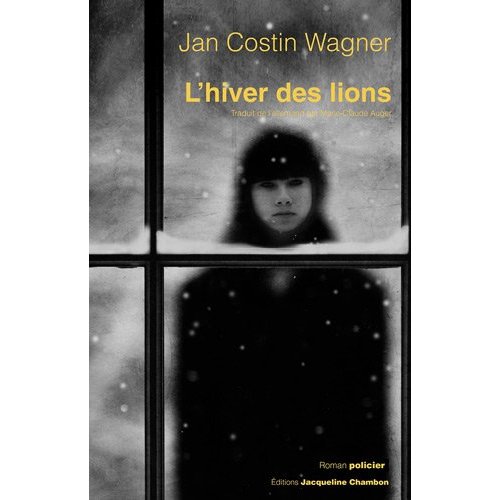
The selection of covers (from the U.K., Germany, and France) is telling: The U.K. cover suggests a frozen forest, when most of the story actually takes place in the cities of Tuku and Helsinki, and a good deal of it happens in the context of a TV talk show rather than a forest (though admittedly the first crime scene is adjacent to a forest), and the film industry in Finland plays an important role in the story. The window looking out on an icy scene (the German version) is more closely evocative of the book, but the French version, of a woman peering in a window, suggests in its use of contrasting haze and clarity more of the psychological realities that the novel turns upon.

Monday, August 15, 2011

Manuel Vazquez Montalban at the movies


Last weekend, I watched the only film version of one of Manuel Vazquez Montalban's Pepe Carvalho novels that I've been able to find with English subtitles, Rafael Alcazar's 1993 film El Labirinto Griego (The Greek Labyrinth, taken from the novel published by Serpent's Tail in English translation as An Olympic Death). There are several other movies and at least two TV series based on private detective Pepe Carvalho and on Vazquez Montalban's novels, but all made for a Spanish audience and not available with subtitles.

But oddly, for El Labirinto Griego, even though Vazquez Montalban was involved in the screenplay, the character's name was changed from Pepe Carvalho to Juan Bardón, and certain other facts about the novel and the life of the detective are changed (plus several of the more colorful running characters are left out). Does anyone know why the name was changed? Copyright problems, given the other film and TV companies that have bought the rights to the Carvalho books? There's also not much about food in the movie, a big departure from the books.

In any case, An Olympic Death/Greek Labyrinth is a somewhat odd book turned into an even odder movie. The plot twists and turns without much logic, leading the detective on a merry chase through a Barcelona that is being transformed by the upcoming Olympic Games (and not for the better, to listen to the detective and other Barcelona natives in the story): In particular, Pueblo Nuevo/Poble Nou (correct me if I have the name or spelling wrong, please), a working class and industrial neighborhood being razed to build the dormitories for the teams. Along the way, the detective and his clients are threatened and the detective is in trouble with the police.

The plot is loosely wound around a man and woman from Paris who hire the detective to find her husband, a Greek painter and artist's model who has run off with a new lover. She keeps justifying her search by saying he is the "man of my life," the title of another book in the series (a much later one). Bardón/Carvalho leads this pair through a tour of Barcelona at night at this specific time in history, visiting a decadent artist's party, a few bars, a warehouse where a couple of theatrical events for the Olympics is being rehearsed, and an abandoned warehouse where the painter has been living. There are a few surprises when the painter is finally found (a bit predictable, though, and tied to the time of the writing and filming), but mostly the story hinges on the emotional experiences of the characters, the detective included. His daughter (I don't remember a daughter from the book, but someone can perhaps let us know if that's a character invented for the movie) is played by a very young Penelope Cruz (her first film, at least that's what's reported in the film's reviews), and the style of filmmaking is visual rather than narrative (sometimes to the point of annoyance, in my opinion, sapping some of the narrative motion). I thought the actors were well chosen, though (even the Galician/Catalan detective is actually played by an Italian).

But this is the one we have if we don't speak Spanish. I'd love to see the TV series (one from the '80s, I think, and one from the '90s, and there are perhaps others), if anyone has a source for subtitled version or can encourage the distributors to subtitle and release them. Some basis for comparing the Laberinto film to the other versions of Pepe Carvalho would be very interesting.

Sunday, August 14, 2011

Kjell Eriksson's The Hand That Trembles


I've been a fan of Kjell Eriksson's crime fiction since his first book featuring Uppsala detective Ann Lindell and her colleagues (The Princess of Burundi) appeared in English translation a few years ago. He has a distinctive voice that separates him from most of the Scandinavian crime wave authors and might make his books less likely to be made into TV or theatrical films.

The distinctive quality of his books, very much in evidence in The Hand That Trembles (published recently by Minotaur in Ebba Segerberg's translation), is a what I think of as a "dailiness." These books are not thrillers, they focus on the everyday lives of people (some of them cops) who happen to be involved in crime, in one way or another.

This new novel features several overlapping plots, beginning with the early and recent history of a man who grew up in rural Sweden, near Uppsala, and ultimately shifted from a career as a plumber to one on politics, as a socialist county commissioner. Most recently, he has vanished from Uppsala and reappeared under an assumed name in Bangalore, living a humble life as a gardener and sometime English instructor in a local school. Why he undertook this journey and why he vanished is a major aspect of the story.

Back in Sweden, in a winter that is a radical contrast to Bangalore, Ann Lindell reluctantly takes on the case of a foot discovered along the shore: reluctantly because the site of the discovery is near the home of her former lover, the father of her young son and, and her longing and loneliness are major factors in this book and the series.

During the investigation, she discovers an almost "locked room" situation, a group of houses apart from the mainland, where a few older people and some middle-aged bachelors live, as well as a younger woman who is a painter (and whose hands are among the trembling ones of the title).

Ann is also involved tangentially in the cold case that her former mentor is investigating, as he recovers from brain surgery, the unsolved murder of an old man in Uppsala who turns out to have been a Nazi sympathizer. While the case of the severed foot moves forward slowly but relentlessly (as Ann and a local colleague speak to the "locked room" houses over and over again), the other threads of the book move along in sudden twists and turns, as threads from Spain, India, and Sweden intertwine. Though there's little likelihood of a reader discovering who severed that foot much before Ann does, there are considerable surprises elsewhere in the story.

So The Hand That Trembles is a police procedural, but also a close-up portrait of a group of people as they live through ordinary and extraordinary circumstances, navigating lost opportunities, regrets, longings, and everyday responsibilities. None of them are stock characters, and it's that "dailiness" that is the prime experience in reading the book, transported though we are to a small city in Sweden and a garden in India.

Eriksson's books relate much more closely to the everyday realism of Swedish crime writing that goes back to Sjöwall and Wahlöö, and that is sometimes evident in Henning Mankell's writing, rather than to the thriller writing of Swedish authors from Stieg Larsson to Liza Marklund. Though I enjoy the thrillers, I am myself more drawn to the quieter, more reflective, and more character-driven works by writers like Eriksson.

Friday, August 12, 2011

Ernesto Mallo, Sweet Money


The sequel to Ernesto Mallo's remarkable Needle in a Haystack, Sweet Money, is scheduled to be published in the U.S. in October, in a translation by Katherine Silver (published by Bitter Lemon Press). Every reviewer of Needle in a Haystack remarks on the surprising fact that there could be a sequel, since "Perro" Lascano, the central character in what we are told is a trilogy, lies dying in the gutter at the end of the first novel.

But Mallo is not engaged in the kind of magic or comic realism that characterizes the life-after-death of the central character of the detective novels of Paco Ignacio Taibo II of Mexico. Mallo's detective is nursed back to health under the protection of a dishonest but wily policeman who is arranging to become the chief of police in Buenos Aires after the end of the military government--and who needs an honest cop like Lascano. But just as Lascano is achieving his recovery, his mentor is shuffled off the stage by a cabal of corrupt police who not only don't need Lascano, they target him for murder.

At the same time, a smart bank robber is released from a prison and follows a plan for his future that quickly falls apart, leaving him in need of cash. His solution is a robbery that has several unfortunate aspects, including a killing, an arrest, and the hidden source of the money stolen. Lascano, hiding from the police, is offered a lot of money to find the surviving robbers and the money before the police do. Lascano needs the money to escape from the police who want to kill him but also to find the woman who got away, his lover from the first novel.

The style of the writing in the series is direct and straightforward, with dialogue presented in blocks of italicized text, with no indication of who is speaking. A reader quickly gets used to the odd presentation of dialogue, and immersed in the multiple pursuits that make up the plot. The charactrers and the story are quickly but vividly drawn, but what Mallo is after isn't so much plot and character as a wider portrait of a society so poisoned by the violence of the military dictatorship (portrayed in Needle in a Haystack) that the new democracy is characterized less by freedom than by greed and corruption. A pervading theme is the kidnapping of dissidents' children, "adopted" by members of the ruling military.

Sweet Money is a grim but not heavy story. Mallo makes us care about the characters and about their shattered social milieu. And the blow that Lascano receives at the end is a final twist that, again, makes a sequel seem unlikely and at the same time inviting.

Tuesday, August 09, 2011

The Hypnotist, by "Lars Kepler"


The new Swedish thriller The Hypnotist, by the psuedonymous Lars Kepler provoked a Swedish media swirl around the nom de plume and discovered that it hides the identity of a married couple, writers Alexandra and Alexander Ahndoril). The identity of the couple was long-revealed before the recent publication in English translation by Ann Long, and in any case the writers (who appaently have a reputation as literary authors in Sweden) are unknown in the rest of the world so there's no thrill of discovery. Reviews of The Hypnotist in translation have varied from positive, to positive-with-some-complaints, to negative. I find myself more to the right-hand side of that spectrum, I'm afraid.

Joona Linna, he central investigator starts out to be an interesting character, but oddly in a novel of over 500 pages, he remains paper thin, merely a bundle of quirks (he's always right and not afraid to say so; he's Finnish; he has a tragedy in his past). More fully realized is the eponymous hypnotist and psychiatrist, Erik Maria Bark, enlisted by Joona to help interrogate a boy after most of his family is brutally murdered and the boy is left for dead.

The plot is interesting and "cinematic," as several reviewers have commented (and a film is apparently on the way): short chapters broken at the point of some crucial revelation; lots of brutality; vivid scene-setting. There are numerous red herrings, and even the main thread of the plot gets left behind a couple of times (once for a very--very--long trip to the hypnotist's past therapy sessions (though the sessions produce both clues and more red herrings, as well as an explanation for Erik's abandonment of hypnotism until the present case, I found these passages distracting rather than revelatory). There are very clever twists, especially in the unveiling of the killer's identity and the shift to a new plot thread (when the hypnotist's son is kidnapped).

I found the conclusion to be operatic--i.e. extravagant and not that believable, though linked to both the main plot and the hynotist's flashbacks. There's also an odd dichotomy between vivid and violent murder and a curious unwillingness to fully embrace the tragedies that the plot veers toward. I can't explain what I mean without giving too much away. I enjoyed the book more than my review my indicate, but found it too long and found Joona in particular to be too undeveloped (maybe he'll get his due in a sequel). I keep separate mental lists of new crime novels that I recommend to friends and others that I don't. On balance, The Hypnotist falls into the latter category--but I'd love to hear from other readers and bloggers that have a more positive reaction to the book (would you recommend it to a friend, or to a friend who's a big fan of the Scandinavian crime wave? Would you recommend it as the first Swedish crime novel they should read?

There are very different covers for the U.S and U.K.: I like them both, graphically, though the U.S. one focuses on a narrow plot point that's hinted at earlier on but only fully present very late in the story.

Saturday, July 30, 2011

Finally, the sequel to Liza Marklund's The Bomber


Years ago, I picked up a copy of Liza Marklund's first crime novel, The Bomber in its English translation) as a remainder in a bookshop. Shortly after, a second novel by her, featuring the same investigative journalist (Annika Bengtzon) showed up, also as a remainder (evidently there'd been a big first printing, the publisher expecting a blockbuster that didn't happen--these were the pre-Tattoo, pre-Scandinavian crime wave days). The puzzling thing was that the second book, Studio Sex, was set years before the first one, a prequel in fact.

And only now has the fifth book in the series caught up with the first: Red Wolf takes place in the aftermath of the emotionally, professionally, and psychologically turbulent (for Annika) conclusion to The Bomber. Annika has passed up a chance to advance in the hierarchy of the Stockholm tabloid where she works (Kvällspressen or Evening Post), choosing instead to be an "independent" writer (though still dependent upon her immediate boss and the paper's editor in chief to actually publish her stories). And the atmosphere around her at work is troubled, even beyond the conflictual scenes of The Bomber.

She's trying to get her editors to publish her research into an old terrorist incident in the far north of Sweden when she falls into something more current and more dangerous: a serial killer is stalking the same northern province, and there are echoes of the earlier incident. But the editors forbid her to pursue the case (they think she's still suffering from shell-shock, as indeed she is).

Annika is surely one of the most flawed leading characters in contemporary series-crime-fiction. The only character I've come across recently who's even close is the heroine in the excellent Danish thriller The Boy in the Suitcase, and even she is more together than Annika. Suffering hallucinations, resistance from her bosses, a husband who's having an affair, Annika is barely holding it together. We see her not only in her own interior monologue, but also as her best friend Anne and her husband Thomas see her, emphasizing the egoism, determination, ambition, near collapse, and self dramatization that make up her character.

But she's never dull. And never as callow (even in the earlier books) as the main character in the pulp thriller she wrote with James Patterson (The Postcard Killer, and by the way, I thought that Patterson could have been bothered to offer a more substantial blurb for the back cover of Red Wolf than just "gripping"). Annika's family life is entirely believable: her frustration with Thomas and Thomas's self-justifications and lies surrounding his affair are drawn with credible and lively strokes.

And the extent to which Annika will go to protect herself and her family plays out in the subplot of family betrayal in perhaps an even more interesting way than in the terror-serial-killer plot, demonstrating a ruthlessness and skill in manipulating the social system and the truth. I don't find her relationship with her editor-in-chief entirely credible in Red Wolf (less so than in earlier books) but the sleazy capitalist tool that he shows himself to be here is a logical outcome of his earlier career, as well as an echo of the main plot, which veers into the history of radical groups in Sweden in the '60s and later.

Marklund is clearly at the forefront of Swedish crime writing, perhaps less well known than she should be because she came earlier than that blockbuster trilogy (and her third and fourth books never appeared in the U.S., the first and second long since out of print here--so that a well known and otherwise well informed critic described Red Wolf as the first of her novels to appear in English).

The two movies by Colin Nutley based on her earlier books also were never released in the U.S. (though The Bomber made a pretty good movie), but there's a new series being developed by Yellow Bird, the film company behind not only the Tattoo trilogy but also the Wallander series (the Swedish TV series not taken from Mankell's novels and the U.K. TV series that was), so maybe the films and the books will finally find their English-language audience. Whether U.S. readers are ready for this deeply flawed character and the mayhem she follows or creates (in her career and her family) is another question.

Wednesday, July 27, 2011

New Swedish crime: Arne Dahl, Misterioso


Arne Dahl's Misterioso, newly translated and published in the U.S., resembles the Sjöwall/Wahlöö Martin Beck series than it does any of the other Scandinavian-crime-boom novels that have been translated so far. There's a brief prelude that seems to have nothing to do with what most of the book is dealing with, there is a team of cops, the style is distinctly "police-procedural," and there's a good deal of social criticism (the tale is set in the 1990s (it was originally published in Swedish at the end of that decade), at the beginning of the financial and other crises that continue to shift the foundations of the "middle-way" capitalist socialism (or socialist capitalism) of Sweden.

There are, however, many differences between the Beck books and Dahl's "A-Unit" series, of which Misterioso is a part (apparently 11 novels published so far in Swedish). Dahl spends a lot of time in the beginning setting up his team (and the similarity of the group's name, arbitrary and tentative though it is at the beginning of the book, is a bit too close to the "A-Team" of American TV fame: especially since threre is a "one of each" quality to the team's members. The ending of the book drags out a bit too long, for me, spending a lot of time setting up the series as a whole, whereas the Beck books end abruptly, carrying forward in a more natural way to the next in the series.

But Misterioso is a good read and has a lot of interesting characteristics, in the diversity of the cops' characters, in the use of music and social commentary, and in Dahl's skill at keeping a story moving forward while the cops are making little or no progress. The story involves a serial killer targeting high-level businessmen in Sweden. Paul Hjelm, in the wake of an incident that simultaneously makes him a hero and a target for Internal Affairs, is recruited to the A-Unit, while also in the midst of a puzzling crisis in his marriage. Though Paul is the main focus of the story, each of the numerous members of the team gets a turn in the spotlight, as each investigates an aspect of the crime or the possible identity of the killer (Russian mafia, disgruntled employee, personal connections among the dead men, etc.).

In a satisfying way, the reader discovers a key element in the crime before the cops do, bringing together the strands of the narrative. The final assault on the killer's hiding place is a bit of an anti-climax, though. There are also a number of coincidences in the story, but the author deals with them in an interesting way, invoking the killer's notion of fate.

It's also interesting that a number of publishers around the world have highlighted different aspects of the crime in their cover art. I'm pasting into this post covers from the U.S., Poland, Spain, and Sweden as examples. I can't figure out the Spanish one, though, the one with the woman's face and the birds...

Thursday, July 21, 2011

New Danish thriller: The Boy in the Suitcase, by Agnete Friis & Lene Kaaberbol


Scheduled for November release in the U.S. by Soho Press, The Boy in the Suitcase, by Agnete Friis & Lene Kaaberbol and translated from the Danish by Lene Kaaberbøl, is an unrelenting roller-coaster ride of a thriller/crime novel with a vivid cast of characters and an unusual "hero." It's also one of the best books I've read this year.

The first sections can be a bit confusing, but all will become clear if the reader just sticks with it. Four threads interweave without any connections being made until much later. In a sort of prologue, someone who has been asked to pick up a heavy suitcase decides to see what's in it before she puts it in her car, and discovers a young boy, alive, neatly folded into it. From there, we meet Jan, an anxious architect; Jucas, an obviously shady character who yearns for a normal family life with his girlfriend but has one more job to do; Sigita, a Lithuanian single mother who has been plunged into a paranoiac's nightmare; and Nina, a nurse who seems to be fleeing her family responsibilities by becoming involved in rescue missions.

All of the people are caught up in a plot wherein nothing goes according to plan, beginning with an airplane delayed when it strikes a seagull and cascading from there on. The outlines of what's going on become clear gradually, with the true nature of the plot becoming clear between half and two-thirds of the way into the book. Along the way, we gain and then lose sympathy and respect for the characters, resulting in a fully drawn and multivalent cast. Nina in particular, obsessive-compulsive or perhaps high-functioning autistic, launching into rescue missions less from bravery than from anxiety, emerges as a new sort of icon for crime fiction.

Agnete Friis, according to Soho's p.r., is a children's book writer and Lene Kaaberbol is a fantasy author, and neither had written crime before their collaboration. Perhaps the vivid quality of the writing has something to do with their diverse backgrounds, and their fresh take on the crime and thriller genres may derive on part from their non-crime writing careers. Whatever the reasons, The Boy in the Suitcase is the impressive beginning to what is reportedly a series (hinted at in the last pages of the novel) featuring the unconventional, troubled, and determined Nina. More, please.

I read an advance reviewer's copy of The Boy in the Suitcase, and I always wonder whether it's best to time a review to coincide with the publication of the book (when readers can actually get hold of the book) or to preview it (especially with a book I am praising, is better (to whet readers' appetites. Let me know what you think, or what you do in your own blog in cases like this.

Wednesday, July 20, 2011

Re-reading crime fiction


What is it that distinguishes crime fiction that you can read over and over again from books that, read once, have exhausted their interest? I'm almost done reading Carlo Fruttero and Franco Lucentini's 1972 The Sunday Woman, translated by William Weaver, for at least the third time (spread out over more than 30 years). The Sunday Woman was published originally more as a mainstream novel than a work of genre fiction, and in fact is seldom cited in the U.S. as a groundbreaking crime novel (though it is). At around the same time I picked up my copy (the early '70s), I was also beginning to read the Martin Beck cycle by Maj Sjöwall and Per Wahlöö, all of which I've re-read at least once.

Where the Swedish writers mixed in a lot of politics and irony as well as comedy, Fruttero and Lucentini give us a lot of comedy, satire, and social observation, without directly engaging in political commentary. Both the Swedish and the Italian collaborators structure the stories as police procedurals (rather than whodunnits or least-likely-suspect stories), which makes re-reading easier for me (the stories are all about process rather than the revelation of the murderers' identities).

But is it the quality of the writing, the pleasure of the comedy, something else, all of the above that makes a crime fiction novel re-readable, a book to save and take off the shelf again and again, rather than something you simply get rid of or something that's just taking up space on a shelf?

By the way, there's a movie version of The Sunday Woman (La donna della domenica) featuring Marcello Mastroianni, Jacqueline Bisset, and Jean-Louis Trintignant, made for Italian TV in the '70s—but it's only available with Italian subtitles (intended for hearing-impaired Italian speakers), not any other languages. What a shame, it should be more accessible (though there's apparently a new Italian mini-series based on the book that is being considered for international release).

Tuesday, July 19, 2011

Turkish crime: Esmahan Aykol's Hotel Bosphorus


Billed as the "first kati Hirschel murder mystery," Hotel Bosphorus by Esmahan Aykol (recently published in a translation by Ruth Whitehouse, for Bitter Lemon Press) starts from a comic and cozy premise: like Colin Bateman's "mystery man," Kati runs a crime fiction bookshop (in Istanbul), and as with Bateman's books, the tone is frequently comic (not quite as broadly as Bateman's, though).

Kati is a German who was born in Turkey and has returned to Istanbul, running through several jobs before opening her bookshop. One of the interesting and amusing things about the story is this reversal, a German immigrant in Turkey, and the culture clash of her situation is a frequent subject of both plot and comedy. A childhood friend who is now a minor film actor arrives in Istanbul to make a movie, and calls on Kati. The reunion takes a sinister turn when the film's director is murdered in his hotel.

The novel seems to be taking a well-trodden cozy-ish path when Kati turns amateur detective and makes a professional and personal connection with a handsome Turkish detective. For a good part of the story, her attraction to the detective and her reluctance to follow through with her desire for him are accompanied by the very slowly moving investigation into the crime (by both parties to the not-quite-consummated affair). After that had gone on for a while with no advance in the story, I was beginning to lose interest in the story.

But there is a sudden turn, when Kati's mother (in Berlin) is hospitalized and Kati feels an urgent need to be by her side. There are a couple of ensuing coincidences that strain credulity a bit, but twist the story in a much more interesting direction (and even the trip to Berlin is interesting, in advancing the culture-clash aspect of the tale). I won't say anything more about that twist, but it takes the story out of the conventional cozy and into much more interesting territory, right through to the conclusion.

The tone is light, throughout, and the violence is off-stage. So even if the books isn't quite a cozy, it's not as dark as the contemporary noir genre can be. I'm interested to see where Aykol takes the series: it could go in either direction, light or dark, or could perhaps maintain the delicate balance that kept Hotel Bosphorus interesting for me. I'm hoping that Bitter Lemon will continue to translate and publish Aykol's work, which is at the very least quite different from the other Turkish crime fiction (but Turks and foreigners) that we have had access to in English up to now.

The cover image, by the way, is related to the crime and is quite atmospheric, but doesn't give much of the flavor of the book--it suggests a much more relevant cover for one of Sophie Hannah's books. Still, it's an attractive cover and does set up one scene that is referred to but never actually experienced by Kati herself (a frequent problem for amateur detectives, who don't have the access of a professional detective to all aspects of a crime).

Tuesday, July 12, 2011

Stuart Neville's Stolen Souls


Due out in the U.S. in October, Stuart Neville's third crime novel, Stolen Souls, is a terrifying trip through a heartless underworld, the dark side of today's Belfast. Galya, forced into prostitution and trapped in a Belfast brothel, escapes by killing a Lithuanian, one of her captors, but every time she seems to have gotten free, another monster appears. And this story is full of monsters: corruption, greed, ruthlessness, and lack of empathy reign.

There are a couple of character with redeeming qualities, beyond Galya herself. Detective Inspector Jack Lennon, the central character, now, in a series that started with a focus on someone else, is deeply flawed, struggling personally and professionally, but not a monster. His daughter (abandoned by him during her first years but now jealously guarded from her mother's family (see the first two novels for details of that relationship) and other threats, retains some of her second sight and is taken care of more often by Susan, her father's neighbor and sort-of girlfriend, more often than by her father himself. Susan is an ordinary person, not a saint but in the novel's mire of horrible people, she shines out as a beacon of normalcy.

As Galya bounces from frying pan to fire, Lennon follows in her wake, tracing the murders that followed the Lithuanian's death (andn there are a lot of deaths). The story is part gang war, part serial killer story, and part revenge tragedy (some of which is carried over from the previous novels, and various elements threaten Lennon from different angles.

A casual reader might have thought The Ghosts of Belfast, Neville's first book, to be an unlikely candidate for a sequel; and that same reader might have thought, after reading Collusion, the second in the series, that any sequel would be unlikely to sustain the ruthless momentum of the first two. But Stolen Souls, while quite different from the first two, is equally compelling and rewarding (and also equally dark, even without the emphasis of the earlier two books on the legacy of the troubles, a minor element here).

Wednesday, July 06, 2011

Cold Swedish noir: Mons Kallentoft


I mentioned yesterday that the newly translated (by Neil Smith, forthcoming in October in the U.K. from Hodder) crime novel by Mons Kallentoft (Midwinter Sacrifice) has a unique style that (at least for me) demands a certain style of reading. The text is frequently allusive and features numerous passages from the point of view of the corpse discovered at the beginning, hanging naked, tortured, high in a tree in the frozen forest near Linköping. The language varies considerably from the fairly straightforward interactions among the police to the very fluid narrative passages, frequently told in sentence fragments.

The style suits the story, which involves urban-rural conflicts and contrasts, cults and the revival of old religions, and the damage that families can do to children. The lead detective, Malin Fors, is a single mother (with a teenage daughter and all the conflicts that that implies). Her colleagues are a distinct group of mostly pretty normal police officers, each with his or her own quirks. The corpse, however, was a damaged man, who seems disturbed and perhaps autistic (though the term is never mentioned) eccentric, if seen from the outside (his monologue after death is surprisingly normal).

The search for the killer or killers is conducted as a police procedural, with more than the usual frustration, perhaps, since no leads give any promise of concrete evidence. There's a dysfunctional family living (literally as well as figuratively) outside the civilized city, a small group worshipping the old Aesir gods, some criminally delinquent teenage boys, a nearly catatonic rape victim and other characters. Some of their stories evidently overlap into later installments of this series (and it will be interesting to see if the author's style changes when his focus changes to other plots and stories),

I tend to appreciate a fairly straight style in crime fiction (allusive, certainly, but perhaps not fragmented in the more poetic style that Kallentoft employs), but Midwinter Sacrifice was very engaging once I got used to the shifts between voices (the narrator's, the corpse's, even a tree at one point) and the dialogue (very realistic) among the cops. The conclusion involves a race to save a trapped victim, but in a way that turns that convention of the thrilling ending upside down and inside out, while also leaving enough unresolved to lead forward to the next installment... Plus I found myself thinking of Sara Lund (from the Danish TV series The Killing) while in Malin's company—a reference that's also made in the back cover blurbs and a comparison that isn't quite accurate but still suggests something of Malin's personality and the tone of the book as well.