Thursday, February 23, 2006

Leonardo Sciascia


The NYRB Press is bringing back into print the translations of Leonardo Sciascia (a gift to the reading public). Sciascia had a few mainstream hardcover publications in the U.S. in the 60s, and there was actually a mass-market paperback of one novel (retitled as "Mafia Vendetta"), and then Godine published The Day of the Owl and Equal Danger together as one of their "Double-detective" books (collector's items now, I think).
But the new editions are very nice--NYRB Press does a good job with their reprints (the U.K. editions that were the only source for One Way or Another and The Moro Affair, and some of the others for a long time were cheaply printed and aged very quickly).
Vintage has had the wisdom to keep the collecction Open Doors in print for some time (the last of the books to become available in English, but the one most constantly in print lately). Having the Sciascias available again raises the tone of the genre. And gives me an excuse to go back and read them again, and report on them here.

Wednesday, February 22, 2006

a little break while waiting...

Hello everyone...anyone? I'm taking a break from posting to the blog while waiting for a crop of new international noir titles to come out this spring. There will be new books from Indridason, Vargas, Manotti, etc., etc. Anyone have suggestions for other new things that should be seen and read by all noir freaks?

Thursday, February 09, 2006

Algerian noir


There have been many attempts to do a "literary" version of the crime novel/roman policier/noir fiction. Most of them fail as crime novels, because the literary concerns overwhelm the genre considerations. Yasmina Khadra's crime trilogy (Morituri, Double Blank, and Autumn of the Phantoms) is the rare case of writing that succeeds on both literary terms and the requirements of the crime novel. And in addition, this is the only (as far as I know) genuine contemporary Arabic policier or noir. Khadra is well-placed to perform this magic act. His character, Superintendent Brahim Llob, is both a copy and a writer, and his writing ultimately gets him in trouble (in a neat bit of postmodern metafiction) in the last novel. Khadra (the name is a pseudonym) was an army officer and a writer whose writing got him into trouble in spite of the false name, and he's now in exile in France (the novels were written in French).
The result is a dark glimpse of the nightmarish situation in a terror-torn Algeria of the 1990s, with fundamentalist murder squads roaming the streets (those squads provide the plot of the 2nd of the 3). There is also considerable corruption and decadence in the scene, and the combination of the two extremes catches Llob and the other (few) hones people in the novels in the middle. Llob, who has sent his family into the country away from the violence (at least possibly away from it), is a doomed figure, struggling (though not without his own violent impulses) against disorder and inhuman violence.
The last of the 3 novels has almost no plot (the first novel centers on a kidnapping, the second on a brutal series of murders). Llob is being persecuted by the police as well as his usual enemies among the decadent Westernized urban elite and the mostly faceless terrorist marauders. As he bounces through this horrific landscape, his few safe havens (literal and figurative) are stripped away and melancholy is the mood throughout. The lack of plot might be off-putting for someone who picked up Autumn of the Phantoms without first reading the other 2 in the series, but as a capstone to the trilogy, the indirect, disordered quality of the novel is perfect. The Llob novels are together a major accomplishment in the crime genre and in the literature of the post-colonial era.

Tuesday, February 07, 2006


Is there anything more classically "noir" than urban street warfare between ruthless gangsters and amoral cops? Add in snappy dialogue and an ending that resolves nothing, and the formula is complete. But what if the dialogue is howlingly funny? Can that be classic noir fiction? Bill James's Harpur and Iles series has a certain resemblance to the work of P.G. Wodehouse, whose work has been compared to classical pastoral poetry. In a hermetic world that is ultimately idyllic, the seemingly troubled events ultimately have no consequences. Wodehouse's world is the ultimate light comedy: weightless, funny, satirical (but only lightly so). James's world (set in a fictional city in the south of England) is equally hermetic, and there are equally few consequences (or at least few changes in the status quo, since there are plenty of corpses that result from the action) but otherwise Wodehouse's lightness is turned into darkness or heaviness (depending on your metaphor). The dialogue between detective Harpur and his superior Iles is almost not dialogue at all: they talk past one another, each indulging in heavy irony and macho one-upmanship. The sexual innuendo spares no one, not even Harpur's teen and pre-teen daughters, who may (or may not) have a thing for Iles, depending on which part of the text you listen to at any particular time. James has invented a dialect as well as a world and once you enter into both, the ride that you are taken on is great fun. James ultimately dismembers the police procedural, the thriller, noir fiction, and any other genre of the crime novel that you can mention, but without stinting on all the elements of each.
Totally within the strictures of series-based crime fiction, James offers something quite different: deconstructive fun of a high literary standard (without sacrificing readability and comedy) much as Wodehouse did in the context of the indescribable genre that he created himself. The only problem with James's Harpur and Iles novels is that there are so many of them (21 to date, at least in their U.S. publication) the experience begins to wear on the reader. On the other hand, there's no need to go back to the beginning--the new one is a great deal of fun even if you have not read any of the earlier ones. Though to my mind the most successful one of all is the almost Shakespearean Astride a Grave, the 8th, which avoids some of the repetitious gang warfare of recent volumes and also is the closest to classic noir structure (though no less funny than the best of the other Harpur and Iles novels). This series is unique.

Thursday, February 02, 2006

Massimo Carlotto and Jim Thompson

The latest of Massimo Carlotto's crime/noir novels to be translated is The Goodbye Kiss. The first two (see earlier posts) are in a series about club owner/private detective "Alligator" in Padua, but Giorgio, of The Goodbye Kiss, is not in that series (though there is an alligator, very early in the novel). Alligator and Giorgio share a background in radical Italian politics (as does the author, and Giorgio shares a good deal of the author's life story, including a time spent in exile after fleeing prosecution in Italy for a political crime, eventual return to Italy, prison time, and ultimate "rehabilitation" under the law. But The Goodbye Kiss is an old-fashioned noir thriller like those of Jim Thompson (and a little like the more recent ones of George Pelecanos, except that Pelecanos's heroes are never as amoral and ruthless as Giorgio). Like Thompson's novels, this one has less a plot than a sequence of events that follow one after the other. And like Thompson's novels, this onesequence demonstrates a descent, murders leading to murders and suspicions leading to the necessity of more murders. But Giorgio is so unlikable that his increasing difficulties in his effort to reach a stable life in Italy seem beside the point. He only seeks the illusion of stability, while having every intention to live as ruthless a life, dominating the women around him in particular, as ever. The ending is less a conclusion than merely a pause in this career. On the positive side, Carlotto's novel is carefully placed in the context of Italian politics, particularly the violent political events of past decades. To look upon the bleakness of this novel's story and it's "hero" as positively as possible, one could say that the author has portrayed the realities of a heartless postmodern Italy, with its turbulent politics replaced by rampant greed and self-interest. Maybe it's too much for me to ask for a little more entertainment, even of the pulp variety such as Jim Thompson would have provided, along the way.

Sunday, January 29, 2006

japanese noir


One of the pleasures of reading mystery and noir in translation is getting a glimpse of other cultures. In spite of the globalization of culture (and literature) there is still a strangeness to crime in other places, a difference in the atmosphere of the streets and the motivation of the criminals. Japanese noir is a glimpse into a culture that is particularly "other" in many ways. Miyuke Miyabe's first novel in translation, All She Was Worth, examines the particularities of Japanese notions of identity (particularly with respect to gender) and debt. The structure of the novel is a pretty straightforward investigation (albeit by a policeman who is not working officially). Miyabe's second novel to make it into English is Shadow Family, whose structure is a "one act play," as one of the characters remarks. The first several chapters are all indirect narrative, just a set up for the main event, which is a long, detailed presentation of an unual, theatrical interrogation scene. Ed McBain did this sort of thing occasionally in the 87th Precinct series, but this version more extended and with particularly Japanese sensibilities. But the major premise of the novel regards Internet identity, and the complex possibilities are really only touched on by Miyabe. The strains inherent in the Japanese family, and the consoling illusion of an "ideal" online family are examined in detail, but the gender-bending opportunities of online identity are not even suggested. Still, the novel is an interesting glimpse into dark corners of ordinary life in Japan. Out, by Natsuo Kirino, is a much darker vision of life (particularly women's lives) in the Japanese working class. Out displays the mundane lives of its characters, but with dark humor and open sexuality (elements missing from Miyabe's work). Out is a bit cartoonish but not necessarily in a bad way. It's a striking experience of the underside of another culture. An even darker ride is Ryu Murakami's In the Miso Soup, whic h takes the reader along on a guided tour of the Japanese sex trade. Murakami's earlier books in English, the amazing Almost Transparent Blue and the more straightforward Coin Locker Babies, are contemporary fiction more than they are noir per se. In the Miso Soup is very much in the noir tradition, from a peculiarly Japanese point of view. It is funny, very (VERY) dark, and has a more distinctive narrative voice that is much livelier than the narrators of Miyabe's books. Speaking of voice, there is frequently a stilted quality to the translations of Japanese mystery novels. That is true with Miyabe and Kirino (though not with Murakami, whose prose may be more global in some ways), as well as with some otherwise excellent mystery/noir novels by Akimitsu Takagi, including the excellent Tattoo Murder Case, whose considerable sensational elements are dampened a bit by the stilted quality of the English prose. These translation problems may be the result of the very different structures of the two languages in question, and present only a small hurdle to the enjoyment of these novels.

Tuesday, January 24, 2006

one more John Brady

The latest Matt Minogue novel from John Brady is Islandbridge, available only in Canada as far as I can tell, from McArthur & Company--Chapters/Indigo's website has it. Islandbridge is much concerned with the transformation of Ireland into a European crossroads, no longer isolated from the "traffic" of all sorts that characterizes the contemporary "noir" environment. Brady's language is, as always, a major focus--anchoring the story and the sentiments about modern Ireland in a regional "sound" of voices and accents. Dublin is also a visual presence, not a sentimental pubby Dublin but a real, embodied city. The threads of the story begin 20 years in the past, with a bleak encounter between a young garda and a couple of thugs, father and son. In the contemporary plot, Minogue steps away from the more administrative tasks that are his current assignment (typified in a lampoon on the stereotypical Powerpoint presentation) to follow his former colleague Tommy Malone into a maze of corruption and violence that will ultimately engulf another of Minogue's colleagues. The ending is a bit odd, leaving the reader to infer not so much what has happened as what will happen, in whatever subsequent novel Brady has in mind. In fact, the plot hinges on guilt and threatened violence more than on overt action. The result is a compelling novel, a very dark but complex pattern of voices, desires, disappointments, and private disasters.

Friday, January 13, 2006

australia and noir


Garry Disher has evidently published a number of novels in Australia, including some crime novels yet to be published in the U.S. His two procedurals published stateside so far, Dragon Man and Kittyhawk Down, combine an ensemble cast a la McBain's 87th Precinct with redneck noir a la Danlel Woodrell's Arkansas noir novels. Kittyhawk Down, published recently, mines the redneck noir vein very effectively, with side plots that are very dark and very violent, though with a comic sensibility. The main narrative threads, featuring homicide detective Hal Challis plus a couple of female cops and a couple of male cops, are as much taken up with the trials of the cops' personal lives as the murders they are investigating. The splintered focus and diverse plots of these procedurals are very effective and entertaining, if you like McBain, Sjowall/Wahloo, etc. And if you like Woodrell (or Scott Phillips for that matter) the country town aspect of Disher's "peninsula" setting is vivid and enjoyable. Altogether worth the trip, and there's evidently at least one more in this series headed for U.S. publication. Speaking of Australia, the Shane Maloney novels, of which there are five now, I think (only 4 published in the U.S.) are very effective urban/comic/political novels. Maloney's portrait of local politics in Australia is very sharp. Of the presumably numerous Australian crime novels, only a few others have made into the noir lists of U.S. publishers. There are a couple of John Dale novels dealing with the urban underworld (very deep in the underworld), plus Caroline Shaw (whose Cat Catcher was published by Serpent's Tail some years ago). Shaw's detective is one of those almost-amateur female detectives that the English do so many of, but this Australian variant is a bit darker and grittier, plus the animal angle is handles without the cuteness of so many U.K. or U.S. cat-related mysteries (Shaw's detective specializes in finding pets, and only tangentially in human investigations). More Aussies out there in the world of noir? Let me know, please.

Sunday, January 01, 2006

more on Irish noir


Ken Bruen's newest Jack Taylor novel is The Magdalen Martyrs, and illustrates the attractions and some of the limitations of his version of noir fiction. Bruen's current series has some peculiar qualities, not the least of which is his tendency to quote other writers in the historical and contemporary noir genre. But his own writing is more Charles Bukowsky than James M. Cain, and in the tradition of Bukowsy, the narrative voice can be fascinating and bleakly poetic. Jack Armstrong is a very self-conscious boozer and druggie, a loser who frequently brings grief to those he loves (or even just associates with). I keep stating that from my point of view, noir writing has to have a social conscience to really qualify as noir, and Bruen's Jack Taylor is really too self-absorbed to reflect consciously on his environment in any effective way, and Bruen's writing is itself too self-absorbed to bring any social consciousness into the narrative at the authorial level. The attempt to link the narrative to the horror of the Magdalen martyrs, enslaved by nuns in Galway in the early and mid-20th century, is the weakest part of the novel Bruen names for them. Bruen's earlier "White Trilogy" was much more in the noir/police procedural vein, and both very dark and very effective in drawing a portrait of contemporary London and (tangentially) Ireland. Bruen's earlier work is interesting but wildly uneven: Rilke on Black is a tantalizing literary take on crime fiction and the literature of the underworld, sending me out looking for other Bruen novels. But Hackman Blues and Her Last Call to Louis MacNeice were disappointing. Bruen seems to be a text machine, churning out novels quickly and giving the impression of not planning or editing much. The considerable charm of the Taylor novels lies principally in the flow of the narrator's voice, and not in the plot or structure. A much more richly constructed version of Irish noir can be found in M.S. Power's Children of the North, a kaleidoscopic trilogy on the so-called Troubles in the recent history of Belfast and Northern Ireland. At times, Children of the North reminded me in its complexity and skeptical intelligence of Ford Maddox Ford's great No More Parades, but in a very contemporary vein and with a rich sense of the tragedy and comedy of recent events in Ireland (and like another novel on the troubles, The Psalm Killer by Christopher Petit, the more you look into actual events, the novels have an eerie quality of being both actual news and prescient clairvoyance). Power's other novels, such as I've been able to find so far, are a bit disappointing, being of smaller scope in terms of both history and literary ambition. But all three of the Children of the North novels (and the massive novel that they collectively become) are strikingly dark, even cynical, as well as being vastly entertaining.

Monday, December 19, 2005

Scotttish noir, and noir in general

Scottish noir is a booming industry, and the output of the Scots raises some questions about noir in general. Alex Gray's Never Somewhere Else has all the elements of noir (dark urban setting, lurking danger, etc) but never really adds up as noir: that is to say, it remains a genre mystery whose formula is ultimately one of reconciling rather than unsettling the relation of reader/character/society. Gray's heroes, a paired Chief Inspector and Psychologist/Profiler (a cliched crime-fighting pair that is getting to be annoying in all its manifestations these days), diligently search for the possibly false serial killer (real killer, maybe not real serial killer) but there's never any sense of gloomy social deterioration or even social commentary. Denise Mina's novels are much more in the noir vein, though I find her writing to be a bit overdone and her character (in her Garnethill trilogy) a bit whiny in her repetitive obsessions. But her Garnethill is vastly more thoroughly drawn than the same setting in the plot of Alex Gray's novel. And there is a real sense of the human frailties at the root of urban rot in Mina's novels. That is the essence of noir, as opposed to mystery or crime fiction per se: a skeptical, even pessimistic, view of the milieu in which the crime takes place. The mystery novels of other Scottish crime writers remain in the non-skeptical, mystery-novel genre (though I do vastly prefer the procedurals of Peter Turnbull--a former social worker, if memory serves me right--rather than the hard-boiled Rebus novels of Ian Rankin, which seem to me too concerned with people in high places to really be noir). For noir dealing with high-rollers, the comic novels of Christopher Brookmyre, particularly the early ones, are much more effective than Rankin, and certainly much more fun, whether they're really noir or not. Brookmyre's Quite Ugly One Morning eventually falls apart somewhat, but the first half (at least) of the novel is very funny in a very dark and violent way.

Tuesday, December 06, 2005

Irish noir


Of the numerous detective, thriller, and noir series set in Ireland, only a few measure up as noir, in my opinion. Ken Bruen's Irish novels are very dark, indeed, but for me a bit too self-consciously literary, as if J.P. Donleavy turned his hand to the dark detective story (I'm led to that comparison by the short lines of verse-like prose that both authors use). Victor Banville's detective stories are very dark, as well, and more firmly in the genre--much better than the late Bartholomew Gill's McGarr series of police procedurals (but there are only a few of the Banville detective stories, and a couple of them are really intended as readers for teaching literacy skills). Of the rest, the best is John Brady's series featuring Matt Minogue, a Dublin policeman. Brady actually lives in Canada, though he was born in Ireland (in County Clare) and purportedly returns often, perhaps to research his series, which now numbers 8 novels (6 available in the U.S., the 2 most recent ones only available in Canada). One feature of the novels that leads one to believe that Brady keeps in touch with his native country is the quality of the description of Dublin and the countryside, which has been undergoing rapid change during the time period of the series. Another is the language. Brady's ear for spoken, Irish-inflected English is astonishing, even achieving distinct regional accents within his eccentric pacing, spelling, and diction. Though all the novels are very good in terms of the detective/noir atmosphere and plot, it is the language that distinguishes them as exceptional, along with the distinct characters who speak that language. The best of the first seven books of the series is the 7th, Wonderland, which has a truly noir plot: events on several tracks hurtle toward one another not in terms of a puzzle or mystery but a dark inevitability. The story hunges (as is usual in the series) on the current state of Ireland's troubled history. As to the 8th book in the series, I'll post an update on that one as soon as I've read it.

Tuesday, November 29, 2005

Kontroll and film noir


It seems as if the most genuine film noir these days is comedy, as with the current "Ice Harvest," or recent examples from Pulp Fiction to Lock, Stock, and Two Smoking Barrels. Playing noir straight verges into self-parody, because of the strictures of the genre, so going straight for the comedy instead is somehow more genuine in the present situation. A recent example of very noir, very dark comedy is Kontroll, directed by Nimrod Antal, a transplanted American who makes films in Hungary. Kontroll takes place entirely in the Budapest Metro, the city's subway system. The characters are mostly ticket inspectors (the subway runs on the honor system, like European trains and buses commonly do--no ticket gates, but don't get caught by an inspector without a ticket (the fines can be very large). In Antal's Budapest, however, the citizens give the ticket inspectors no respect at all (so much so that the actual Metro system's director has a cameo before the film's titles, explaining his logic in giving permission for the filming of this anti-establishment epic). The ragtag band of inspectors includes one picaresque hero, Bulcsu, on whom the movie hangs--he never leaves the subway (the movie's ending hinges on the possibility that he may now leave, in the company of the female romantic lead--who is at that point dressed as a fairy. This is as much a fairy tale as film noir, just as was Modern Romance, another comic-noir film of a few years ago). Kontroll includes a serial murderer who appears suspiciously like Bulcsu (and may simply be his "other," his dark self. Biographical details are vaguely outlined, leaving much mysteriousness about the characters as well as the story, but giving a sense of a dark event that propelled the hero from an above-ground world (a succesful career as, possibly, an architect) into the lower depths. There are several other threads to the narrative dealing with crimes from the petty to the violent as well as rivalries among the inspectors, and most of these plot elements leave marks on Bulcsu, who is a bloody mess by the film's end. His violently comic descent leads, though, to that fairy-tale ending at the first step of the escalator up (Modern Romance ended on the beach, against all logic). Perhaps we believe in neither an orderly universe that the noir hero can ultimately uphold nor a cynical, disorderly universe against which the hero can vainly struggle--our world is so ambiguous that it is neither the one nor the other, and noir comedy has absorbed the exhausted insight of Beckett's characters in its darkness as well as its comedy.

Monday, November 21, 2005

noir/not noir? plus John Williams and UK


I haven't posted in a while--I've been absorbed in John Williams's Cardiff trilogy (Five Pubs, Two Bars And a Nightclub; Cardiff Dead; and The Prince of Wales), which raises several questions for this blog. The first is that I have not yet dealt directly with contemporary noir in the U.K., since I've been concentrating on noir-in-translation from non-English-speaking countries. There is of course a wealth of crime writing in English (and numerous excellent publishing houses supporting that writing), and I intend to address that gap in my journal soon. Williams's books also raise the question of what kind of plot qualifies as noir. His trilogy deals with a criminal subculture in Wales (prostitution, gangland-style machinations, suspicious death, etc.), but there is no murder plot per se, and only a detective in a marginal way (Mazz, in Cardiff Dead, halfheartedly pursues a missing rock star on commission from a sort of gangster, but it's not essential to the main narrative). The atmosphere of the novels, though, is pure noir, and has a lot in common with the milieu of George Pelecanos's undoubtedly noir Washington novels. The Cardiff of Williams's books is in transition from a lower-class soup of races, underworld clubs and professions, and people living at the margins of society. What it's moving toward is the artificial "downtown" of so many U.S. cities--theme pubs, new developments, and the closing of institutions like the Custom House, a late-night bar favored by streetwalkers. The novels are actually about the city, and Williams employs a kaleidoscope of characters throughout the stories in the first volume and the 2 novel-sequels, each a particular angle on what's happening to the city in its transition. The result is a gritty realism that a focus on a single character could not provide, and Williams's writing is unfailingly interesting, lively, and engaging. So it's noir in a literary vein rather than a murder-genre vein, I guess. It would be interesting to have a discussion of the noir-or-not question with regard to Williams--perhaps there's a panel waiting to be convened on the topic?

Thursday, October 27, 2005

Massimo Carlotto


I've already mentioned Massimo Carlotto's first book to be translated into English, The Colombian Mule: now there's a second volume in the series, The Master of Knots. The title refers to the main plotline, having to do with the underground S & M scene in northern Italy. The unofficial detective agency, really a "gang," that is at the center of the series is made up of a bar owner and two of his friends (all 3 ex-cons, one of them a gangster and the other two "politicals"). The interplay among them (and a subplot concerning the protests surrounding a G8 conference in Genoa) are quite interesting, and the three shuttle back and forth across the northern half of Italy on their various detection errands. The main plot, however, is marred by several cliches (one that is getting to be quite annoying in the genre as a whole, the mythical "snuff film") and by a curiously offstage handling of the chief villain (the "master of knots," a bondage master who trained in Japan). The focus does remain with the detectives (chief among them the narrator, a bar owner identified as "Alligator" in the first novel, but mostly as a first-person voice in the second; in the first novel, the Colombian segment of the plot is narrated in the third person, shifting the focus away from the main characters, who are the most interesting aspect of the series. There is in both novels a considerable amount of discussion of prison (which annoys the gangster-detective, Beniamino Rossini, and threatens to annoy the reader as well), but the life-story of Carlotto (who like Alligator was imprisoned unjustly in a famous political case) informs the discussion and the overall plot as well: at least we know that he has first-hand knowledge of the milieu (of prison, the underworld, and the setting, which revolves around Padua). In case all of the above sounds like faint praise, I should make it clear that the novels are lively, not over-long, and that they include a great deal of interesting detail about Italy, Padua, and the fringes of the criminal underworld to keep them entertaining.

Monday, October 24, 2005

Carlo Lucarelli


The first of Carlo Lucarelli's noir thrillers to be translated into English was Almost Blue (not to be confused with the amazing Japanese "underground" novel Almost Transparent Blue, by Ryu Murakami). Almost Blue (available from City Lights Press, in their City Lights Noir series, in the U.S.) is entertaining but a bit sketchy. The story relies heavily on the surreal interior monologues of the killer, nicknamed the Iguana by the police, and a blind "witness" who is the only one who can recognize the killer, by his voice, since the Iguana changes his appearance at will. The surreal, even magic realist, quality of the narrative threatens to overwhelm the police procedural (featuring detective Grazia Negro and the team that her boss is putting together in Bologna), and the sketchiest part of the book is indeed the procedural/detective portion. But the evocation of the city of Bologna is wonderful, and some elements of the plot are fascinating. The denoument is a bit abrupt, though. The second in the series, Day After Day (recently translated and available in the U.K. from Harvill Press. Day After Day is more satisfying in several ways. Although the plot is almost a carbon copy of Almost Blue (substituting a cold contract killer for the impassioned serial killer of the earlier book), the narrative's poetic qualities (particularly in the narratives of this book's witness and killer) are less surreal, more pertinent to the other narrative, that of Ispettore Negro and the police. And the resolution, though firmly in the formula of the series, is more fully realized in the second book. The only drawback (and the only reason I would not recommend readers to simply begin with the second book and ignore the first) is that Bologna is a more fully realized site for the plot in Almost Blue. So I recommend the series, as a dark, poetic noir/policier in a very Italian mode--but don't stop with the first book, do go on to the second for a more complete version of the genre and of Lucarelli's formula.

Wednesday, October 19, 2005

Tonino Benacquista's Someone Else


I've already mentioned the first book by Tonino Benacquista to be translated into English from the French original (Holy Smoke), and the second has recently become available (Someone Else), also from Bitter Lemon Press in the UK. Someone Else pursues two different lines of narrative that were characteristic of one of the masters (mistresses?) of noir, Patricia Highsmith: the casual encounter that precipitates events of great consequence to the parties involved (as in Strangers on a Train) and the amoral manipulations of Highsmith's Tom Ripley character. Plus there are other elements suggestive of those Highsmith novels: the use of a tennis match as a significant detail (one of the characters in Strangers on a Train was a tennis player) and a character who is a framer by trade (one of the characters that Ripley manipulates and then befriends is a framer, and owns a frame business, just as in Someone Else). What is missing from Benacquista's novel is the sense of menace that Highsmith injects into her novels, even when there hasn't been a murder yet. There is in fact never a murder (except by a character who "kills off" his former self), though there is toward the very end a shooting. And though a detective agency plays a large role, Someone Else doesn't really ever rely on the nature of detective work for any of its narrative drive. Someone Else is definitely in the noir tradition, not only in the references to Highsmith but also in Benacquista's use of despair as a driving impulse for the two main characters; but it is more in the tradition of the early noir than the contemporary, bloodier and more violent entries in the genre (remember the slowly developing plots of James M. Cain, for instance--modern noir is more in the vein of the notorious No Orchids for Miss Blandish, not by Cain but closer to that era than to our own--No Orchids stared with a violent bang and descends in violent stages to a grotesque and melodramatic conclusion, a plot closer to our own era than to Cain's). Someone Else concerns a bargain--more a bet really--between two strangers who meet in a tennis club in Paris. Over much vodka (a new experience for one of them, previously a teetotaler) a proposal is made that each of them should try to become the "someone else" that he has dreamed of becoming throughout his mundane life. Each succeeds, in very different ways, and each achieves a payoff of a sort. The narrative is engaging, though not comic in the way Holy Smoke was, but the narrative could have used some editing or perhaps some relief from the very gradual ascent (or descent) of the characters in their new lives--perhaps some more sudden, even violent, shifts to spark things up. But who am I to give the author advice. If Someone Else does not quite rise to Highsmith's heights (and doesn't seek the same humorous narrative rewards as the author's own Holy Smoke) it's still an entertaining and interesting return to the early traditions of noir.

Tuesday, October 04, 2005

"Fred Vargas"


Fred Vargas is the psuedonym of a French scientist, a woman, who's been turning out interesting romans policier for several years. The novels, Have Mercy on Us all (published first in English, but actually the second novel of the series) and Seeking Whom He May Devour (the first novel in the series), both have titles in English that are considerably different than the French originals--the original titles would have taken some explanation in English, but I for one dislike the practice of changing the titles in translations. Vargas's work might be characterized as a "grand-guignol" noir. Her characters are depicted in terms of a bundle of characteristic traits and tics of speech that are repeated over and over. The effect is archaic, reminiscent of the novels and plays of earlier centuries. That effect is of a piece with her novelistic strategy as a whole--the first novel deals with lycanthropy and the rural French werewolf legends in particular; The second deals with the bubonic plague (and in particular the talismans used to ward off the disease) as well as the revival of the trade of the town crier. These themes are folded into a more-or-less conventional police procedural (less conventional in the werewolf novel than the plague novel), but even that is twisted into a pre-modern (or perhaps post-modern is the proper term) mode by the character of Commissaire Principal Adamsberg, her detective. Adamsberg is absent-minded, illogical, impulsive, and intuitive--constantly grasping mentally for an idea or a person that is just out of his conscious reach. The effect of the almost Dickensian characterizations, the folklore motifs, and the police drama is comic, but nonetheless dark and seductive, practically a modern Gothic version of noir. The combination of the Gothic and the comic is, of course, what led me to think of the series as grand guignol--and the novels follow that model in their aggression, pacing, and impact. A third English translation from the series is promised for January 06.

Wednesday, September 21, 2005

French romans policiers, in English


One of the best police/noir novels in recent years is Rough Trade, by Dominique Manotti (Sombre Sentier in the original French). Manotti's novel subverts all the cliche's of the genre, from the personality of the central character, to his love-life, to police procedure, to the logic of the thriller. It's almost impossible to describe the plot without giving something away that's better discovered in the book, but it is possible to mention that Manotti uses history and politics to great effect as the background and atmosphere of the book. Setting the main narrative a decade and a half into the Parisian past, to coincide with an actual event (a strike among the illegal immigrants employed in sweat shops connected to the rag trade), Manotti is able to both evoke that event and that era and also to provide a coda that extends the narrative both literally and emotionally. Turkish immigrants, the Asian drug trade, prostitution, police coercion, homosexuality, labor relations, and much more historical and political material are at the heart of the book, but the plot is nonetheless brisk (almost breathless). Manotti gives us a most unusual and enjoyable experience. Chantal Pelletier's Goat Song follows a somewhat enervated detective Marice Laice (there's a joke about his name that is a bilingual French-English pun) through the club culture of Paris and the dark underbelly of real estate speculation and drugs. The book is quite entertaining, and in the end both melancholy and romntic, but not quite up to Manotti's standard, in terms of its impact and its realism or believability. Jean-Claude Izzo's One Helluva Mess (original French title: Total Kheops, a slang expression that the English title doesn't really capture) is a tour through the underworld of Marseille. Izzo starts off the book with an exiled gangster returning to Marseille with revenge on his mind, and then the book takes a radical turn, focusing instead on a police detective and former friend of the gangster. Izzo's novel is not a straight roman policier, but instead is a dark, almost romantic take on a changing Marseille: in particular it's Algerian subculture in conflict with its more established population of French men and women who were mostly themselves immigrants a generation or two earlier. Izzo's hero moves freely through the diverse communities, though at home in none of them, and his story is engaging. It's tempting to include the police novels of Yasmina Khadra here, since a post-colonial Algeria is the setting and the theme for them, but I'll restrict myself to a couple of comments: Khadra's two books translated into English so far are fast, somewhat fragmented, very sexist, violent portraits of a chaotic, millennial, even apocalyptic social situation in an Algiers that is perched on the edge between a corrupt regime and a ruthless fundamentalist revolt. They evoke a new Battle of Algiers that, in Khadra's portrait, is a ruthless war zone in both literal and moral terms. On a far lighter note, the first of Tonino Benacquista's novels to be published in English (there are 2 in English now, but I haven't read the 2nd one yet) is a comic take on the life and trials of a 2nd generation Italian immigrant family in Paris--and the connection of its scion, Benacquista's hero, to the land (literally) of his forefathers. Benacquista takes on the mafia, the church, and the structure of the noir/thriller genre here, with quite enjoyable results. In a later installment on France: Fred Vargas and others.

Friday, September 09, 2005

contemporary roman noir (translated from the French)

Coming soon: contemporary French noir (home of the term I'm using so much)--reviews of translations from Jean-Claude Izzo, Fred Vargas, Dominique Manotti, Jean-Patrick Manchette, Chantal Pelletier, Tonino Benacquista, and more...

Saturday, September 03, 2005

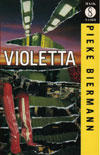
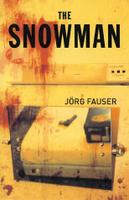
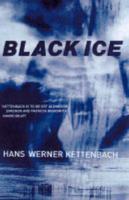
Some German noir


Hans Werner Kettenbach's Black Ice is very dark indeed, a tour through the mind of a not-too-bright German employee of a civil engineering firm who thinks his boss murdered the wife that he had married for her money (and control of the firm). Kettenbach's tale is claustrophobic, with a carefully controlled point of view--the combination of those elements gives the tale a Hitchkockian air--something akin to the novels of Patricia Highsmith (not the Ripley novels but her very claustrophobic novels like The Blunderer, which Black Ice resembles in some ways) or Ruth Rendell. Kettenbach's character Jupp takes a long while to figure out how his boss might have done it, and then another long while deciding what to do about it--and ultimately makes a couple of very disastrous decisions about the latter. Ingrid Noll's The Pharmacist is equally claustrophobic, and a bit more comic, but her tale of poison, jealousy, and betrayal is a bit inert for my taste. It may be telling that "The Pharmacist," available only in the UK as far as I know, is published there not by one of the great English publishers of Eurocrime and international noir (No Exit, Serpents Tail, etc) but by Harper & Collins--the more mainstream audience is perhaps what the publisher, and the writer, have in mind rather than the audience for noir. Noir in Germany is best known (outside Germany at least) in the form of Jakob Arjouni's detective novels, featuring a German-born Turkish detective who is a German citizen. These books (or the 3 that are available in English--Arjouni also has non-detective novels, including Magic Hoffman, which is available in English) are an effective blend of the detective stock-in-trade and the experience of being an outsider in Europe. Arjouni's tales do not always turn on the Turkish/German tension, though--he often deals with other social ills, and the novels are truly an alternative history of Germany just before reunification. A word of caution--two "titles" of Arjouni novels in English are apparently the same novel; the titles are One Death to Die--published by Fromm International--and One Man One Murder--not as commonly available, but it appears in book searches from time to time). Another detective of West Germany, police detective Karin Lietze, can be found in English in Pieke Biermann's Violetta, published some years ago by Serpents Tail, and published in its German original the year after the fall of the Wall. Biermann's detective is caught up in several murder investigations that involve racism, a serial killer, a band of vengeful feminists, and other denizens of an apolcalyptic, millennial Berlin. The novel is a satirical and kaleidoscopic view of Berlin street life just as the Soviet bloc was coming apart but before the fall of the Wall, is amusing and entertaining, and I wish more of her work were available in English. Violetta is a self-conscious "novel," in the sense that there is literary as well as social satire, and the point of view jumps all over the place, but the surface level of the narrative itself is always lively, frequently funny, and at the same time very dark. Biermann's novel is in a way a meta-noir, a commentary on the form, as well as having some nostalgic looks backward toward the Berlin of Christopher Isherwood's famous stories. There are a couple of very dark non-detective novels of post-unification Germany: Rain, by Karen Duve, is a gloomy, grotesque tale of a loser who agrees to ghost-write a gangster's memoir, and takes his beautiful wife to a cabin in the former East, where he can live cheaply while working on the book. Rain, damp, and ensuing slugs (lots and lots of them) and other horrors intervene in his plans, resulting in a grotesque allegory of postmodern life in general and German life in particular, post reunification. The tale is gross, comic, disgusting, and fascinating. A less compelling but more pleasant dark comedy can be found in Christoph Hein's Willenbrock, which deals with crime and ultimately murder, but in a flat, laconic style more geared toward a literary audience than a genre crowd. Willenbrock is a former Easterner making a go of it as a used car entrepreneur in the new Germany, but confronted by social ills and tensions that are both new and age-old among the Germans. Bitter Lemon Press, who publish Black Ice, has also recently published a couple of other apparently classic German noir novels, one of which I liked and the other not so much. The Snowman, by Jörg Fauser, is an on-the-lam-from-drug-dealers tale of a down-and-out German emigre who is eking out a living in Malta by selling old Danish porn magazines, but suddently finds himself in the possession of a large quantity of the best cocaine in the world. Fauser's novel is a road movie of violence and the underworld, very graphic, funny, and enjoyable. The Russian Passenger, by Gunter Ohnemus, is a Richard-Brautigan-influenced (yes, it's true, however incredible it may seem) novel of Russian mobsters and the German working-class. An ex-writer now cab-driver hooks up with the wife of a Russian mobster, who has escaped from him with a lot of money. The story starts out interesting but gradually subsides into the allegorical manner of Brautigan and winds up in San Francisco (of course) with an unsatisfying conclusion that violates the first-person narrative in a not-very-interesting way.