Wednesday, September 07, 2011

Leif GW Persson: Another Time, Another Life


Another Time, Another Life, by Leif GW Persson, is scheduled to be published in the U.S. in March, 2012 (by Pantheon, in translation by Paul Norlen). The novel is a sequel to last year’s Between Summer's Longing and Winter's End, and both have the subtitle, “The Story of a Crime,” which inevitably suggests the great Martin Beck series by Maj Sjöwall and Per Wahlöö (especially in the Swedish context). But Persson is doing something different from S&W, at least in these first two volumes of what is said to be a trilogy: he is dissecting a particular crime with national and international consequences, brought into the perspective of the daily routines of the investigating police (who are portrayed warts and all). S&W were focused more closely on the lives of ordinary citizens stressed by the tensions of the welfare state of the 1970s in Sweden. But Persson's writing shifts back and forth between an almost documentary style and a fictional form, drawing the reader along seamlessly through story and history.

The earlier book led up to the assassination of Olaf Palme, and this newly translated one begins with the bombing of the German embassy in Stockholm in 1975 by factions of the German radical movement that’s generally lumped under the heading “Baader Meinhof Gang.” There are several jumps forward from the year of the bombing to the late ‘80s (and the fall of the Soviet bloc) to the late ‘90s, when a murder in the ‘80s comes into focus with the embassy bombing. Along the way, Persson depicts the security establishment of Sweden is less-than-flattering terms, while also repeating to the point of comedy the policemen’s assessment of one another as a “real policeman” and their work as “real police work.” The same pattern is to be found in the earlier book, as well.

One of the interesting things about reading these two books is the way they interlace the history of modern Sweden and the lives of the characters who appear in both.

But in the second book there is a new twist. Many readers have remarked on the sexism of Between Summer’s Longing and Winter’s End, with some wondering whether Persson was portraying accurately the macho attitudes of the police of the time or was perhaps himself betraying his own attitudes. The new book doesn’t answer that latter question, but here he’s playing with the sexism/machoism in a blatant way. Jarnebring, the lead detective of the first sections of the book keeps referring to his new female partner but both he and the narrator refuse to give her a name. She turns out to hold her own, though, forcing them to recognize her as an individual. And soon after, a contrast is drawn with an old-line male pathologist and a new female one who is far more knowledgeable and professional than the male (though one running character in Persson’s books, Detective Bäckström, refuses her conclusions and goes to the old man for confirmation of his own prejudices about the victim.

Those prejudices (and Bäckström’s other sins) come back again in an amusing way in the last pages of the book, while the story has shifted to a squad made up of Jarnebring’s friend and now superior officer (Johannson) and three hyper-competent female detectives. But neither the narrator nor the police environment has suddenly become enlightened on the topic of gender: the police and others continue to utter disparaging remarks about women in particular and specific female characters as well. If the sexism hasn’t disappeared, it’s at least interesting (and often funny) when thrown into the stark contrast that Persson accomplishes in Another Time, Another Life.

And Another Time is indeed an accomplished work of crime fiction, holding my interest easily through it’s 400-plus pages and offering a subtle and complex payoff at the end. Persson is, we’re told, a leading expert on crime in Sweden and a criminal profiler much in demand. He has experience and authority in his portrait of the police (in a way that begs comparison with the past master of the police story in the U.S., fictional and documentary, Joseph Wambaugh--also known for the comic elements of his books). In addition to the trilogy, it looks like all of his books recycle the characters in the two translated books, leading me wish for more translations beyond those apparently planned at the moment (at least one film based on his books, The Man from Mallorca, had international distribution some years ago).

As a point of disclosure but also an explanation of the cover pasted into this review, I received an advance galley of Another Time, Another Life from Pantheon, its U.S. publisher: the galley was bound in a plain yellow wrapper, but inside was a possible cover that more or less matches the style of the U.S. cover of Between Summer's Longing and Winter's End, but I haven’t been able to find an image of it anywhere--hence the Swedish one that shows up above--which I actually prefer to the U.S. covers anyway because it ties the story to the historical event (without being quite as explicit about the violence of the event as another cover published for the book in Sweden).

Wednesday, August 31, 2011

The Rage, by Gene Kerrigan


Irish crime writing was already booming before the economic bust in that country, but the collapse seems to be supplying even richer material for the writers there. The gritty realism of Gene Kerrigan seems to have anticipated bad times, as if his style of noir has only now found its proper environment.

His new novel, The Rage, is a very good book that very effectively evokes the decline in the Irish economy and sense of national identity. Bob Tidey is a detective who is determined to the right thing for the victims and their families, and his efforts lead him into a professional and personal quagmire. Vincent Naylor, recently released from prison, is a hard man who's trying to control his impulses, not to go straight but to make the risks of his actions match his possible gains, especially in the complex and daring robbery he has in mind.

The strength of Kerrigan's writing is that the cop and the thug, not to mention Tidey's obstructive bosses and Naylor's criminal associates, are fully human. Tidey struggles with his duty and his conscience and his relationship with his former wife. Naylor struggles with his anger, his impulsive older brother, and his sense of justice (which is fueled by the rage of the book's title). Naylor seems on sounder footing in his relationship to the new woman in his life, a better match than he deserves. One minor character who is essential to the plot, a nun, gets more and more complex as the story goes along, drawing in the traditional virtues (some of them no longer seeming so virtuous) and recent failings of the Irish church. She in particular could have been less interesting and more of a bit player in the hands of a lesser writer, and sh adds a lot to the depth of the story.

The plot is subtle and thoroughly believable, with a lot of killing but without using death as a casual plot device. I've been a fan of Kerrigan's since he started writing fiction (I haven't read his nonfiction crime writing, but I understand it to be highly regarded), and like Maxine over at Petrona-land, I found his third book, Dark Times in the City, to be very good but not quite as darkly effective (emotionally and dramatically) as his first two novels. But The Rage is very good indeed, and I found in it some of the grim poetry of the first two books (which Maxine found less evident in this book), as well as a very original approach to crime writing, responsive to both the demands of storytelling and the truth of a realistic portrayal of a very specific social milieu.

I'm pasting in two covers, the one that seems to be the official Harvill Secker cover and one that seems to be an alternate (it shows up only on a couple of Australian sites—perhaps an official Aussie cover?). The Aussie or alternate one is closer to the actual story, but the official one is more tensely ambiguous. But neither really evokes the power of the story that they purportedly depict.

Saturday, August 27, 2011

All Yours, by Claudia Piñeiro


All Yours, Argentine writer Claudia Piñeiro's second novel to be translated into English (in this case by Miranda France), is really more a satire than a crime novel, and it's sometimes quite funny, in a dark way. While that's also true of her first book, Thursday Night Widows, that novel is a bit more complex and realistic. All Yours is more like a novella, with a plot that takes a couple of twists and is narrated in several voices but is much more straightforward that the earlier book.

Ines overhears a phone conversation between her husband, Ernesto, and a woman, and suspects betrayal. She follows him and witnesses a confrontation between Ernesto and his secretary: he shoves her and she falls against a tree stump, breaking her neck. Ines sneaks away without confronting Ernesto, and what follows (mostly in her voice but also briefly in his and occasionally in what seem to be police documents) is a tale of self-deception and revenge and a final twist.

Interspersed with the main story is the story, mostly in dialogue, of Ines and Ernesto's teenage daughter, who suffers from typical teenage angst and a few more serious problems. But her story veers off from the main plot without really reconnecting to her parents' tragedy. I don't know if the book would have been better if her story were more developed or simply left out, but it seems underdeveloped and not that relevant as it is.

But All Yours is a quite interesting social satire, making fun of middle-class suburban life in a more straightforward way that Thursday Night Widows. It's a quick read and remains light and entertaining. In a way, it's the flip side of the social portrait given in Ernesto Mallo's dark novels of the military dictatorship and its aftermath. Piñeiro's world is the shallow bourgeois social miasma that has followed a more overtly dangerous political past. The cover, by the way, is very effective as an image, and suggests the sexuality inherent in the story but isn't otherwise very much related to the plot.

Friday, August 26, 2011

China, thrillers, and a "forgotten friday" entry


Rock Paper Tiger, by Lisa Brackmann, is more of a thriller than a crime novel. There are probably or likely murders, but no corpses; lots of violence and many threats, but not much effort to solve a mystery. What it reminded me of in an odd way is a wonderful book from the 1960s, Lionel Davidson's The Rose of Tibet. The Rose of Tibet was much praised when first published and has been revived from time to time, but it's still worth reminding people about a book that is in part a throwback to the great adventure novels of previous centuries, updated to the 20th century's global politics.

First, Rock Paper Tiger: the story revolves around Ellie Cooper, an Iraq-war veteran and former medic who saw a few too many things during the war that now threaten her psychological balance, her marriage (to another Iraq vet), and even personal safety. She finds herself adrift in Beijing, having left her husband, sent there by a security company (sort of a small-scale Blackwater). He found a Chinese girlfriend and she left him, having already left the Christianity that was (besides the war) about all they had in common.

Ellie has fallen in with some fringe groups she drifted into while studying Chinese: some Internet role-game-players and some artists, in particular. On a visit to an artists' compound (a vivid glimpse into the overheated world of Chinese contemporary art and its conflicts with a suspicious and paranoid government) she briefly meets a Uighur who may be a freedom fighter or a terrorist (depending on your point of view) who is apparently on the run. Then her artist friend disappears. Then she's invited into the different but possibly overlapping worlds of art collectors and game players, while simultaneously being pursued by various threatening groups (sometimes hard to tell apart) from various governments and interest groups, all of whom want something from her (it's not too clear exactly what) and all of whom are willing to exert violent force to get it.

What ensues is a wild ride back and forth across the new China, with glimpses of the old China. It's in these sections that the resemblance to The Rose of Tibet occurred to me: in that book, an Englishman who had come to Tibet to look for a missing brother is thrust into the role of protector for a young boy and a beautiful woman, with whom he travels in haste across the mountains, with the Chinese army in hot pursuit (it's during the Red Army's invasion of Tibet). Davidson's story is marvelous, a wild, sometimes funny, sometimes erotic, sometimes even spirtual quest or flight that never lets up. Don't listen to me, go read it. Graham Greene meets H. Rider Haggard, as reviewers have remarked. Or Eric Ambler (another writer unjustly gathering dust) meets Edgar Rice Burroughs. There's nothing quite like it (even among Davidson's other, in different ways also excellent, books. It would have made a great movie, if anyone managed to do it right, though it's probably impossible to do it now (special effects would kill the story).

Brackman's novel is almost as intense, a good trick given how vague the threats to her and the goal she is supposedly seeking are. the book has a bit of a cyber-punk edge (in the gaming and its devotees) as well as some serious consideration of the extent to which both repressive and supposedly democratic governments will go in the era of globalized terror and global paranoia. I enjoyed the story and its propulsive motion, and also felt a not-unpleasurable sense of having been conned, when the threats against Ellie more or less evaporate. The real point of the story, I suppose, is Ellie's growth, her shift from a passivity that even predates her PTSD war experience. Her voice is paramount, and Brackman's chief achievement is that the reader never doubts her and remains interested in her and in her voice.

Saturday, August 20, 2011

Norwegian noir: The Shadow in the River, part 2


The Shadow in the River, a 2005 Norwegian crime novel by Frode Grytten, is classic noir with a wry edge. It could almost be Chinatown, with the incest changed to adultery and the water rights manipulation motivated by development changed to industrial theft motivated by globalization (there's even a sly reference to the movie). It's a Jim Thompson novel with a political theme (the same racism and xenophobia recently used as an excuse by a deranged Norwegian nazi) and a bit of Samuel Beckett's absurd comedy.

Grytten vividly evokes a grim post-industrial landscape and its citizens (some winners but most losers as their town dies). The narrator and central character, Robert Bell (I wonder if the anglo name is itself a noir reference) is the pessimistic wise-cracking anti-hero of noir, this time a reporter on the verge of losing his job rather than a down-and-out detective.

The plot is not complicated. A young man has drowned in the river, his car forced off the road. He had been fighting with some Serbian immigrants, and everyone is happy to assume that the foreigners are guilty of the crime. In the first half of the novel, Robert lethargically investigates the crime, which has attracted national attention, while occasionally seeing his brother, a police detective, around town and in press conferences.

The brother finally appears directly in the second half, first to ask Robert to accept a TV station's invitation to appear on a news show to discuss the investigation from their different points of view and then to confront Robert about the fact that has become the central tragedy of Robert's life: he is in love with, and having an on-again off-again affair with, his brother's wife.

There's murder, racial hatred, adultery among brothers, plus blackmail, manipulation of the town industry's bankruptcy…plus the worldy and wry voice of the narrator—all the elements necessary for first-class noir. Plus an element of the absurd in both the plot and Robert's attitude, as well as globalism, to bring the story up to date.

Grytten has written a series of short stories based on Edward Hopper paintings, certainly a noir topic, but no other crime fiction that I'm aware of. I had been putting off reading The Shadow in the River because I'd read reviews that made it sound grim and self-consciously “literary,” but the book is winning in its style and its development of the noir form. If you're in the mood for something dark but funny, downbeat but vivid, I'd highly recommend it.

Friday, August 19, 2011

Frode Grytten's The Shadow in the River, part 1


Split my review of a short book into two parts might seem odd, but this is an odd book in some ways. The reviews I'd read of The Shadow in the River (translated from Frode Grytten's Norwegian by Robert Ferguson) mostly emphasized the dark and grim qualities of the book; to be honest, it didn't seem very inviting, and it was pretty expensive every time I looked for it, so I forgot about it. Recently I noticed an ex-library copy on-line that was cheap enough to give it a try.

The beginning is indeed a bit dark and grim, concerned with a reporter, the discovery of a body in the river, and small town pettiness, and the style is clipped and indirect, not pursuing the crime so much as portraying the reporter in his own voice. But once it gets going, the book has a lot of bitter humor. Especially toward the middle, where I am now in my rapid progress through the book, with the swarm of national newspapers descending upon the small, decaying, formerly industrial town of Odda, the comedy is quite broad, though still dark (almost Evelyn Waugh-like in tone, and Waugh, too, took on the press).

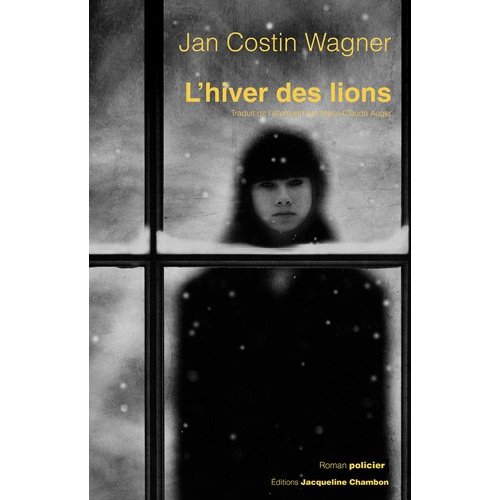
The humor reminded me of a line repeated a few times in Jan Costin Wagner's The Winter of the Lions, not a book (or a series) much noted for its humor (though th odd sense of humor of somoe of the characters is referred to occasionally). In a book whose characters are called Kimmo Joentaa, Ari Pekka Sorajärva, Tuomas Heinonen, Kai-Petteri Hämäläinen, etc., every time the name of an emergency-room doctor is mentioned, Valtteri Muksanen, some one says "Funny sort of name" or something like that. Does anyone recognize if that's a joke (to a German or Finnish reader)?

More about the plot of The Shadow in the River soon.

Thursday, August 18, 2011

The Winter of the Lions, by Jan Costin Wagner


Structurally, the third Kimmo Joentaa novel to be translated into English (by Anthea Bell (from the German original of author Jan Costin Wagner), is a straightforward police procedural. Joentaa, still finding it quite difficult to cope with the death of his wife (a major theme in the first of the novels, Ice Moon) is called out to a crime scene where one of his team's own crime techs has been murdered savagely. The attack came while the man was cross-country skiing, early on a winter morning (just before Christmas, a season where a number of recent Scandinavian crime novels have been set). Christmas in Finland is evoked quite vividly by Wagner.

Another attack suggests a direction for the investigation, confirmed by a third, but there are no clues to work with. It's a bit unusual for police procedurals to concentrate on a mere detective, not the head of his unit or team. Joentaa is very much the eccentric outlier, doing what he's told but then moving off on his own tangent (which he frequently finds it difficult to explain to his colleagues). H latches onto an idea and slowly works through it until he finds some kind of thread to unravel.

The slowness of the investigation's progress and Joentaa's constant memory of his wife (particurly her last moments) give the book a melancholy, even poetic quality. The narrative sticks with Joentaa for the most part, but shifts into the head of a troubled woman who seems to have something to do with the crime, but her relation to reality is vague, and we get little sense of who she is until Joentaa begins to clarify for himself what has happened. The reader is pulled in by impressions rather than events: the interest is more in how te crimes happened rather than who is the killer. The charaterizations are somewhat quirky: some characters are fully fleshed out and others are sketched simply with a few elements of personality or their relationship to someone else.

The selection of covers (from the U.K., Germany, and France) is telling: The U.K. cover suggests a frozen forest, when most of the story actually takes place in the cities of Tuku and Helsinki, and a good deal of it happens in the context of a TV talk show rather than a forest (though admittedly the first crime scene is adjacent to a forest), and the film industry in Finland plays an important role in the story. The window looking out on an icy scene (the German version) is more closely evocative of the book, but the French version, of a woman peering in a window, suggests in its use of contrasting haze and clarity more of the psychological realities that the novel turns upon.

Monday, August 15, 2011

Manuel Vazquez Montalban at the movies


Last weekend, I watched the only film version of one of Manuel Vazquez Montalban's Pepe Carvalho novels that I've been able to find with English subtitles, Rafael Alcazar's 1993 film El Labirinto Griego (The Greek Labyrinth, taken from the novel published by Serpent's Tail in English translation as An Olympic Death). There are several other movies and at least two TV series based on private detective Pepe Carvalho and on Vazquez Montalban's novels, but all made for a Spanish audience and not available with subtitles.

But oddly, for El Labirinto Griego, even though Vazquez Montalban was involved in the screenplay, the character's name was changed from Pepe Carvalho to Juan Bardón, and certain other facts about the novel and the life of the detective are changed (plus several of the more colorful running characters are left out). Does anyone know why the name was changed? Copyright problems, given the other film and TV companies that have bought the rights to the Carvalho books? There's also not much about food in the movie, a big departure from the books.

In any case, An Olympic Death/Greek Labyrinth is a somewhat odd book turned into an even odder movie. The plot twists and turns without much logic, leading the detective on a merry chase through a Barcelona that is being transformed by the upcoming Olympic Games (and not for the better, to listen to the detective and other Barcelona natives in the story): In particular, Pueblo Nuevo/Poble Nou (correct me if I have the name or spelling wrong, please), a working class and industrial neighborhood being razed to build the dormitories for the teams. Along the way, the detective and his clients are threatened and the detective is in trouble with the police.

The plot is loosely wound around a man and woman from Paris who hire the detective to find her husband, a Greek painter and artist's model who has run off with a new lover. She keeps justifying her search by saying he is the "man of my life," the title of another book in the series (a much later one). Bardón/Carvalho leads this pair through a tour of Barcelona at night at this specific time in history, visiting a decadent artist's party, a few bars, a warehouse where a couple of theatrical events for the Olympics is being rehearsed, and an abandoned warehouse where the painter has been living. There are a few surprises when the painter is finally found (a bit predictable, though, and tied to the time of the writing and filming), but mostly the story hinges on the emotional experiences of the characters, the detective included. His daughter (I don't remember a daughter from the book, but someone can perhaps let us know if that's a character invented for the movie) is played by a very young Penelope Cruz (her first film, at least that's what's reported in the film's reviews), and the style of filmmaking is visual rather than narrative (sometimes to the point of annoyance, in my opinion, sapping some of the narrative motion). I thought the actors were well chosen, though (even the Galician/Catalan detective is actually played by an Italian).

But this is the one we have if we don't speak Spanish. I'd love to see the TV series (one from the '80s, I think, and one from the '90s, and there are perhaps others), if anyone has a source for subtitled version or can encourage the distributors to subtitle and release them. Some basis for comparing the Laberinto film to the other versions of Pepe Carvalho would be very interesting.

Sunday, August 14, 2011

Kjell Eriksson's The Hand That Trembles


I've been a fan of Kjell Eriksson's crime fiction since his first book featuring Uppsala detective Ann Lindell and her colleagues (The Princess of Burundi) appeared in English translation a few years ago. He has a distinctive voice that separates him from most of the Scandinavian crime wave authors and might make his books less likely to be made into TV or theatrical films.

The distinctive quality of his books, very much in evidence in The Hand That Trembles (published recently by Minotaur in Ebba Segerberg's translation), is a what I think of as a "dailiness." These books are not thrillers, they focus on the everyday lives of people (some of them cops) who happen to be involved in crime, in one way or another.

This new novel features several overlapping plots, beginning with the early and recent history of a man who grew up in rural Sweden, near Uppsala, and ultimately shifted from a career as a plumber to one on politics, as a socialist county commissioner. Most recently, he has vanished from Uppsala and reappeared under an assumed name in Bangalore, living a humble life as a gardener and sometime English instructor in a local school. Why he undertook this journey and why he vanished is a major aspect of the story.

Back in Sweden, in a winter that is a radical contrast to Bangalore, Ann Lindell reluctantly takes on the case of a foot discovered along the shore: reluctantly because the site of the discovery is near the home of her former lover, the father of her young son and, and her longing and loneliness are major factors in this book and the series.

During the investigation, she discovers an almost "locked room" situation, a group of houses apart from the mainland, where a few older people and some middle-aged bachelors live, as well as a younger woman who is a painter (and whose hands are among the trembling ones of the title).

Ann is also involved tangentially in the cold case that her former mentor is investigating, as he recovers from brain surgery, the unsolved murder of an old man in Uppsala who turns out to have been a Nazi sympathizer. While the case of the severed foot moves forward slowly but relentlessly (as Ann and a local colleague speak to the "locked room" houses over and over again), the other threads of the book move along in sudden twists and turns, as threads from Spain, India, and Sweden intertwine. Though there's little likelihood of a reader discovering who severed that foot much before Ann does, there are considerable surprises elsewhere in the story.

So The Hand That Trembles is a police procedural, but also a close-up portrait of a group of people as they live through ordinary and extraordinary circumstances, navigating lost opportunities, regrets, longings, and everyday responsibilities. None of them are stock characters, and it's that "dailiness" that is the prime experience in reading the book, transported though we are to a small city in Sweden and a garden in India.

Eriksson's books relate much more closely to the everyday realism of Swedish crime writing that goes back to Sjöwall and Wahlöö, and that is sometimes evident in Henning Mankell's writing, rather than to the thriller writing of Swedish authors from Stieg Larsson to Liza Marklund. Though I enjoy the thrillers, I am myself more drawn to the quieter, more reflective, and more character-driven works by writers like Eriksson.

Friday, August 12, 2011

Ernesto Mallo, Sweet Money


The sequel to Ernesto Mallo's remarkable Needle in a Haystack, Sweet Money, is scheduled to be published in the U.S. in October, in a translation by Katherine Silver (published by Bitter Lemon Press). Every reviewer of Needle in a Haystack remarks on the surprising fact that there could be a sequel, since "Perro" Lascano, the central character in what we are told is a trilogy, lies dying in the gutter at the end of the first novel.

But Mallo is not engaged in the kind of magic or comic realism that characterizes the life-after-death of the central character of the detective novels of Paco Ignacio Taibo II of Mexico. Mallo's detective is nursed back to health under the protection of a dishonest but wily policeman who is arranging to become the chief of police in Buenos Aires after the end of the military government--and who needs an honest cop like Lascano. But just as Lascano is achieving his recovery, his mentor is shuffled off the stage by a cabal of corrupt police who not only don't need Lascano, they target him for murder.

At the same time, a smart bank robber is released from a prison and follows a plan for his future that quickly falls apart, leaving him in need of cash. His solution is a robbery that has several unfortunate aspects, including a killing, an arrest, and the hidden source of the money stolen. Lascano, hiding from the police, is offered a lot of money to find the surviving robbers and the money before the police do. Lascano needs the money to escape from the police who want to kill him but also to find the woman who got away, his lover from the first novel.

The style of the writing in the series is direct and straightforward, with dialogue presented in blocks of italicized text, with no indication of who is speaking. A reader quickly gets used to the odd presentation of dialogue, and immersed in the multiple pursuits that make up the plot. The charactrers and the story are quickly but vividly drawn, but what Mallo is after isn't so much plot and character as a wider portrait of a society so poisoned by the violence of the military dictatorship (portrayed in Needle in a Haystack) that the new democracy is characterized less by freedom than by greed and corruption. A pervading theme is the kidnapping of dissidents' children, "adopted" by members of the ruling military.

Sweet Money is a grim but not heavy story. Mallo makes us care about the characters and about their shattered social milieu. And the blow that Lascano receives at the end is a final twist that, again, makes a sequel seem unlikely and at the same time inviting.

Tuesday, August 09, 2011

The Hypnotist, by "Lars Kepler"


The new Swedish thriller The Hypnotist, by the psuedonymous Lars Kepler provoked a Swedish media swirl around the nom de plume and discovered that it hides the identity of a married couple, writers Alexandra and Alexander Ahndoril). The identity of the couple was long-revealed before the recent publication in English translation by Ann Long, and in any case the writers (who appaently have a reputation as literary authors in Sweden) are unknown in the rest of the world so there's no thrill of discovery. Reviews of The Hypnotist in translation have varied from positive, to positive-with-some-complaints, to negative. I find myself more to the right-hand side of that spectrum, I'm afraid.

Joona Linna, he central investigator starts out to be an interesting character, but oddly in a novel of over 500 pages, he remains paper thin, merely a bundle of quirks (he's always right and not afraid to say so; he's Finnish; he has a tragedy in his past). More fully realized is the eponymous hypnotist and psychiatrist, Erik Maria Bark, enlisted by Joona to help interrogate a boy after most of his family is brutally murdered and the boy is left for dead.

The plot is interesting and "cinematic," as several reviewers have commented (and a film is apparently on the way): short chapters broken at the point of some crucial revelation; lots of brutality; vivid scene-setting. There are numerous red herrings, and even the main thread of the plot gets left behind a couple of times (once for a very--very--long trip to the hypnotist's past therapy sessions (though the sessions produce both clues and more red herrings, as well as an explanation for Erik's abandonment of hypnotism until the present case, I found these passages distracting rather than revelatory). There are very clever twists, especially in the unveiling of the killer's identity and the shift to a new plot thread (when the hypnotist's son is kidnapped).

I found the conclusion to be operatic--i.e. extravagant and not that believable, though linked to both the main plot and the hynotist's flashbacks. There's also an odd dichotomy between vivid and violent murder and a curious unwillingness to fully embrace the tragedies that the plot veers toward. I can't explain what I mean without giving too much away. I enjoyed the book more than my review my indicate, but found it too long and found Joona in particular to be too undeveloped (maybe he'll get his due in a sequel). I keep separate mental lists of new crime novels that I recommend to friends and others that I don't. On balance, The Hypnotist falls into the latter category--but I'd love to hear from other readers and bloggers that have a more positive reaction to the book (would you recommend it to a friend, or to a friend who's a big fan of the Scandinavian crime wave? Would you recommend it as the first Swedish crime novel they should read?

There are very different covers for the U.S and U.K.: I like them both, graphically, though the U.S. one focuses on a narrow plot point that's hinted at earlier on but only fully present very late in the story.

Saturday, July 30, 2011

Finally, the sequel to Liza Marklund's The Bomber


Years ago, I picked up a copy of Liza Marklund's first crime novel, The Bomber in its English translation) as a remainder in a bookshop. Shortly after, a second novel by her, featuring the same investigative journalist (Annika Bengtzon) showed up, also as a remainder (evidently there'd been a big first printing, the publisher expecting a blockbuster that didn't happen--these were the pre-Tattoo, pre-Scandinavian crime wave days). The puzzling thing was that the second book, Studio Sex, was set years before the first one, a prequel in fact.

And only now has the fifth book in the series caught up with the first: Red Wolf takes place in the aftermath of the emotionally, professionally, and psychologically turbulent (for Annika) conclusion to The Bomber. Annika has passed up a chance to advance in the hierarchy of the Stockholm tabloid where she works (Kvällspressen or Evening Post), choosing instead to be an "independent" writer (though still dependent upon her immediate boss and the paper's editor in chief to actually publish her stories). And the atmosphere around her at work is troubled, even beyond the conflictual scenes of The Bomber.

She's trying to get her editors to publish her research into an old terrorist incident in the far north of Sweden when she falls into something more current and more dangerous: a serial killer is stalking the same northern province, and there are echoes of the earlier incident. But the editors forbid her to pursue the case (they think she's still suffering from shell-shock, as indeed she is).

Annika is surely one of the most flawed leading characters in contemporary series-crime-fiction. The only character I've come across recently who's even close is the heroine in the excellent Danish thriller The Boy in the Suitcase, and even she is more together than Annika. Suffering hallucinations, resistance from her bosses, a husband who's having an affair, Annika is barely holding it together. We see her not only in her own interior monologue, but also as her best friend Anne and her husband Thomas see her, emphasizing the egoism, determination, ambition, near collapse, and self dramatization that make up her character.

But she's never dull. And never as callow (even in the earlier books) as the main character in the pulp thriller she wrote with James Patterson (The Postcard Killer, and by the way, I thought that Patterson could have been bothered to offer a more substantial blurb for the back cover of Red Wolf than just "gripping"). Annika's family life is entirely believable: her frustration with Thomas and Thomas's self-justifications and lies surrounding his affair are drawn with credible and lively strokes.

And the extent to which Annika will go to protect herself and her family plays out in the subplot of family betrayal in perhaps an even more interesting way than in the terror-serial-killer plot, demonstrating a ruthlessness and skill in manipulating the social system and the truth. I don't find her relationship with her editor-in-chief entirely credible in Red Wolf (less so than in earlier books) but the sleazy capitalist tool that he shows himself to be here is a logical outcome of his earlier career, as well as an echo of the main plot, which veers into the history of radical groups in Sweden in the '60s and later.

Marklund is clearly at the forefront of Swedish crime writing, perhaps less well known than she should be because she came earlier than that blockbuster trilogy (and her third and fourth books never appeared in the U.S., the first and second long since out of print here--so that a well known and otherwise well informed critic described Red Wolf as the first of her novels to appear in English).

The two movies by Colin Nutley based on her earlier books also were never released in the U.S. (though The Bomber made a pretty good movie), but there's a new series being developed by Yellow Bird, the film company behind not only the Tattoo trilogy but also the Wallander series (the Swedish TV series not taken from Mankell's novels and the U.K. TV series that was), so maybe the films and the books will finally find their English-language audience. Whether U.S. readers are ready for this deeply flawed character and the mayhem she follows or creates (in her career and her family) is another question.

Wednesday, July 27, 2011

New Swedish crime: Arne Dahl, Misterioso


Arne Dahl's Misterioso, newly translated and published in the U.S., resembles the Sjöwall/Wahlöö Martin Beck series than it does any of the other Scandinavian-crime-boom novels that have been translated so far. There's a brief prelude that seems to have nothing to do with what most of the book is dealing with, there is a team of cops, the style is distinctly "police-procedural," and there's a good deal of social criticism (the tale is set in the 1990s (it was originally published in Swedish at the end of that decade), at the beginning of the financial and other crises that continue to shift the foundations of the "middle-way" capitalist socialism (or socialist capitalism) of Sweden.

There are, however, many differences between the Beck books and Dahl's "A-Unit" series, of which Misterioso is a part (apparently 11 novels published so far in Swedish). Dahl spends a lot of time in the beginning setting up his team (and the similarity of the group's name, arbitrary and tentative though it is at the beginning of the book, is a bit too close to the "A-Team" of American TV fame: especially since threre is a "one of each" quality to the team's members. The ending of the book drags out a bit too long, for me, spending a lot of time setting up the series as a whole, whereas the Beck books end abruptly, carrying forward in a more natural way to the next in the series.

But Misterioso is a good read and has a lot of interesting characteristics, in the diversity of the cops' characters, in the use of music and social commentary, and in Dahl's skill at keeping a story moving forward while the cops are making little or no progress. The story involves a serial killer targeting high-level businessmen in Sweden. Paul Hjelm, in the wake of an incident that simultaneously makes him a hero and a target for Internal Affairs, is recruited to the A-Unit, while also in the midst of a puzzling crisis in his marriage. Though Paul is the main focus of the story, each of the numerous members of the team gets a turn in the spotlight, as each investigates an aspect of the crime or the possible identity of the killer (Russian mafia, disgruntled employee, personal connections among the dead men, etc.).

In a satisfying way, the reader discovers a key element in the crime before the cops do, bringing together the strands of the narrative. The final assault on the killer's hiding place is a bit of an anti-climax, though. There are also a number of coincidences in the story, but the author deals with them in an interesting way, invoking the killer's notion of fate.

It's also interesting that a number of publishers around the world have highlighted different aspects of the crime in their cover art. I'm pasting into this post covers from the U.S., Poland, Spain, and Sweden as examples. I can't figure out the Spanish one, though, the one with the woman's face and the birds...

Thursday, July 21, 2011

New Danish thriller: The Boy in the Suitcase, by Agnete Friis & Lene Kaaberbol


Scheduled for November release in the U.S. by Soho Press, The Boy in the Suitcase, by Agnete Friis & Lene Kaaberbol and translated from the Danish by Lene Kaaberbøl, is an unrelenting roller-coaster ride of a thriller/crime novel with a vivid cast of characters and an unusual "hero." It's also one of the best books I've read this year.

The first sections can be a bit confusing, but all will become clear if the reader just sticks with it. Four threads interweave without any connections being made until much later. In a sort of prologue, someone who has been asked to pick up a heavy suitcase decides to see what's in it before she puts it in her car, and discovers a young boy, alive, neatly folded into it. From there, we meet Jan, an anxious architect; Jucas, an obviously shady character who yearns for a normal family life with his girlfriend but has one more job to do; Sigita, a Lithuanian single mother who has been plunged into a paranoiac's nightmare; and Nina, a nurse who seems to be fleeing her family responsibilities by becoming involved in rescue missions.

All of the people are caught up in a plot wherein nothing goes according to plan, beginning with an airplane delayed when it strikes a seagull and cascading from there on. The outlines of what's going on become clear gradually, with the true nature of the plot becoming clear between half and two-thirds of the way into the book. Along the way, we gain and then lose sympathy and respect for the characters, resulting in a fully drawn and multivalent cast. Nina in particular, obsessive-compulsive or perhaps high-functioning autistic, launching into rescue missions less from bravery than from anxiety, emerges as a new sort of icon for crime fiction.

Agnete Friis, according to Soho's p.r., is a children's book writer and Lene Kaaberbol is a fantasy author, and neither had written crime before their collaboration. Perhaps the vivid quality of the writing has something to do with their diverse backgrounds, and their fresh take on the crime and thriller genres may derive on part from their non-crime writing careers. Whatever the reasons, The Boy in the Suitcase is the impressive beginning to what is reportedly a series (hinted at in the last pages of the novel) featuring the unconventional, troubled, and determined Nina. More, please.

I read an advance reviewer's copy of The Boy in the Suitcase, and I always wonder whether it's best to time a review to coincide with the publication of the book (when readers can actually get hold of the book) or to preview it (especially with a book I am praising, is better (to whet readers' appetites. Let me know what you think, or what you do in your own blog in cases like this.

Wednesday, July 20, 2011

Re-reading crime fiction


What is it that distinguishes crime fiction that you can read over and over again from books that, read once, have exhausted their interest? I'm almost done reading Carlo Fruttero and Franco Lucentini's 1972 The Sunday Woman, translated by William Weaver, for at least the third time (spread out over more than 30 years). The Sunday Woman was published originally more as a mainstream novel than a work of genre fiction, and in fact is seldom cited in the U.S. as a groundbreaking crime novel (though it is). At around the same time I picked up my copy (the early '70s), I was also beginning to read the Martin Beck cycle by Maj Sjöwall and Per Wahlöö, all of which I've re-read at least once.

Where the Swedish writers mixed in a lot of politics and irony as well as comedy, Fruttero and Lucentini give us a lot of comedy, satire, and social observation, without directly engaging in political commentary. Both the Swedish and the Italian collaborators structure the stories as police procedurals (rather than whodunnits or least-likely-suspect stories), which makes re-reading easier for me (the stories are all about process rather than the revelation of the murderers' identities).

But is it the quality of the writing, the pleasure of the comedy, something else, all of the above that makes a crime fiction novel re-readable, a book to save and take off the shelf again and again, rather than something you simply get rid of or something that's just taking up space on a shelf?

By the way, there's a movie version of The Sunday Woman (La donna della domenica) featuring Marcello Mastroianni, Jacqueline Bisset, and Jean-Louis Trintignant, made for Italian TV in the '70s—but it's only available with Italian subtitles (intended for hearing-impaired Italian speakers), not any other languages. What a shame, it should be more accessible (though there's apparently a new Italian mini-series based on the book that is being considered for international release).

Tuesday, July 19, 2011

Turkish crime: Esmahan Aykol's Hotel Bosphorus


Billed as the "first kati Hirschel murder mystery," Hotel Bosphorus by Esmahan Aykol (recently published in a translation by Ruth Whitehouse, for Bitter Lemon Press) starts from a comic and cozy premise: like Colin Bateman's "mystery man," Kati runs a crime fiction bookshop (in Istanbul), and as with Bateman's books, the tone is frequently comic (not quite as broadly as Bateman's, though).

Kati is a German who was born in Turkey and has returned to Istanbul, running through several jobs before opening her bookshop. One of the interesting and amusing things about the story is this reversal, a German immigrant in Turkey, and the culture clash of her situation is a frequent subject of both plot and comedy. A childhood friend who is now a minor film actor arrives in Istanbul to make a movie, and calls on Kati. The reunion takes a sinister turn when the film's director is murdered in his hotel.

The novel seems to be taking a well-trodden cozy-ish path when Kati turns amateur detective and makes a professional and personal connection with a handsome Turkish detective. For a good part of the story, her attraction to the detective and her reluctance to follow through with her desire for him are accompanied by the very slowly moving investigation into the crime (by both parties to the not-quite-consummated affair). After that had gone on for a while with no advance in the story, I was beginning to lose interest in the story.

But there is a sudden turn, when Kati's mother (in Berlin) is hospitalized and Kati feels an urgent need to be by her side. There are a couple of ensuing coincidences that strain credulity a bit, but twist the story in a much more interesting direction (and even the trip to Berlin is interesting, in advancing the culture-clash aspect of the tale). I won't say anything more about that twist, but it takes the story out of the conventional cozy and into much more interesting territory, right through to the conclusion.

The tone is light, throughout, and the violence is off-stage. So even if the books isn't quite a cozy, it's not as dark as the contemporary noir genre can be. I'm interested to see where Aykol takes the series: it could go in either direction, light or dark, or could perhaps maintain the delicate balance that kept Hotel Bosphorus interesting for me. I'm hoping that Bitter Lemon will continue to translate and publish Aykol's work, which is at the very least quite different from the other Turkish crime fiction (but Turks and foreigners) that we have had access to in English up to now.

The cover image, by the way, is related to the crime and is quite atmospheric, but doesn't give much of the flavor of the book--it suggests a much more relevant cover for one of Sophie Hannah's books. Still, it's an attractive cover and does set up one scene that is referred to but never actually experienced by Kati herself (a frequent problem for amateur detectives, who don't have the access of a professional detective to all aspects of a crime).

Tuesday, July 12, 2011

Stuart Neville's Stolen Souls


Due out in the U.S. in October, Stuart Neville's third crime novel, Stolen Souls, is a terrifying trip through a heartless underworld, the dark side of today's Belfast. Galya, forced into prostitution and trapped in a Belfast brothel, escapes by killing a Lithuanian, one of her captors, but every time she seems to have gotten free, another monster appears. And this story is full of monsters: corruption, greed, ruthlessness, and lack of empathy reign.

There are a couple of character with redeeming qualities, beyond Galya herself. Detective Inspector Jack Lennon, the central character, now, in a series that started with a focus on someone else, is deeply flawed, struggling personally and professionally, but not a monster. His daughter (abandoned by him during her first years but now jealously guarded from her mother's family (see the first two novels for details of that relationship) and other threats, retains some of her second sight and is taken care of more often by Susan, her father's neighbor and sort-of girlfriend, more often than by her father himself. Susan is an ordinary person, not a saint but in the novel's mire of horrible people, she shines out as a beacon of normalcy.

As Galya bounces from frying pan to fire, Lennon follows in her wake, tracing the murders that followed the Lithuanian's death (andn there are a lot of deaths). The story is part gang war, part serial killer story, and part revenge tragedy (some of which is carried over from the previous novels, and various elements threaten Lennon from different angles.

A casual reader might have thought The Ghosts of Belfast, Neville's first book, to be an unlikely candidate for a sequel; and that same reader might have thought, after reading Collusion, the second in the series, that any sequel would be unlikely to sustain the ruthless momentum of the first two. But Stolen Souls, while quite different from the first two, is equally compelling and rewarding (and also equally dark, even without the emphasis of the earlier two books on the legacy of the troubles, a minor element here).

Wednesday, July 06, 2011

Cold Swedish noir: Mons Kallentoft


I mentioned yesterday that the newly translated (by Neil Smith, forthcoming in October in the U.K. from Hodder) crime novel by Mons Kallentoft (Midwinter Sacrifice) has a unique style that (at least for me) demands a certain style of reading. The text is frequently allusive and features numerous passages from the point of view of the corpse discovered at the beginning, hanging naked, tortured, high in a tree in the frozen forest near Linköping. The language varies considerably from the fairly straightforward interactions among the police to the very fluid narrative passages, frequently told in sentence fragments.

The style suits the story, which involves urban-rural conflicts and contrasts, cults and the revival of old religions, and the damage that families can do to children. The lead detective, Malin Fors, is a single mother (with a teenage daughter and all the conflicts that that implies). Her colleagues are a distinct group of mostly pretty normal police officers, each with his or her own quirks. The corpse, however, was a damaged man, who seems disturbed and perhaps autistic (though the term is never mentioned) eccentric, if seen from the outside (his monologue after death is surprisingly normal).

The search for the killer or killers is conducted as a police procedural, with more than the usual frustration, perhaps, since no leads give any promise of concrete evidence. There's a dysfunctional family living (literally as well as figuratively) outside the civilized city, a small group worshipping the old Aesir gods, some criminally delinquent teenage boys, a nearly catatonic rape victim and other characters. Some of their stories evidently overlap into later installments of this series (and it will be interesting to see if the author's style changes when his focus changes to other plots and stories),

I tend to appreciate a fairly straight style in crime fiction (allusive, certainly, but perhaps not fragmented in the more poetic style that Kallentoft employs), but Midwinter Sacrifice was very engaging once I got used to the shifts between voices (the narrator's, the corpse's, even a tree at one point) and the dialogue (very realistic) among the cops. The conclusion involves a race to save a trapped victim, but in a way that turns that convention of the thrilling ending upside down and inside out, while also leaving enough unresolved to lead forward to the next installment... Plus I found myself thinking of Sara Lund (from the Danish TV series The Killing) while in Malin's company—a reference that's also made in the back cover blurbs and a comparison that isn't quite accurate but still suggests something of Malin's personality and the tone of the book as well.

Tuesday, July 05, 2011

Brian McGilloway's Little Girl Lost and some other stuff


Does speed (as in how fast you read a book) make a difference to your appreciation of a book? Does speed indicate something about the book itself? A few days ago, I finished Brian McGilloway's new book (featuring a new character, DS Lucy Black, of the new Northern Ireland Police in Derry), and started reading the much longer Midwinter Sacrifice, by Swedish author Mons Kallentoft (his first to be translated, featuring Detective Malin Fors of the Linköping police). I finished Little Girl Lost quickly (it's not that long) but actually read the text at a fairly leisurely rate (engaged with the story but not forced by the plot to speed up to reach the conclusion). I find that with Kallentoft's prose, which is almost stream of consciousness (lots of sentence fragments, sections from the point of view of the corpse discovered at the beginning) I can only stay engaged with the story if I read very quickly—not to advance toward the end of the over-400-page story, but simply to keep up with the flow of the language.

Little Girl Lost steps aside from the characters in McGilloway's previous novels and into Lucy Black's complicated personal and professional life. She has returned to Derry to take a new job and to take care of her ailing father, only to be shunted into an ostensibly less prestigious position in the force and also to discover that her father is slipping quickly into the difficulties of Alzheimer's. She is called to the scene of the sighting of a young girl wandering in the frozen forest during a winter storm, thinking that the girl is the one everyone is looking for (the kidnapped daughter of a local builder) but finding instead a younger girl covered in blood that is not her own.

Once it is discovered that it's not the kidnapped girl, no one seems very interested (except Lucy) in the girl, who is now mute and unresponsive). Lucy tries to discover who she is, while also trying to stay involved in the hunt for the kidnapping victim, and when she discovers links, the police hierarchy try to steer her away from the high profile case. Her family history (her parents both cops, in the complicated situation of Catholic police officers in the Troubles) and her conflicts with her superiors are matched by her increasing difficulties with her father (and all strains of the story converge, in a perhaps too convenient way, making Derry sound like one of those small cities where everying and everyone are ultimately connected).

I found the fairly straightforward storytelling very appealing, though less complex than the more ruminative Inspector Devlin series (set in the borderlands between Ireland and Norther Ireland). The far less straightforward Midwinter Sacrifice gave me some trouble until I sped up my reading: it's not that the prose is difficult or self-consciously literary; it's more that the style is very expansive rather than economical. We've grown to expect a certain terseness in the writing of noir fiction and a simplicity of style in more conventional mysteries. The complexity is not particularly a Swedish style (from Larsson to the many newly translated Swedes and back to the classic Sjöwall/Wahlöö books there is a great variety of styles, as well as lengths, in crime fiction books), but seems in this case linked to the subject matter, replete with mysticism, malice, and insular families.

One more entry in this "portmanteau" post: I'm halfway thtough watching the excellent RAI TV series based on Carlo Lucarelli's De Luca novels. The films are very well made, capturing the period (end of WWII in Italy) as well as the character of the conflicted Commissario De Luca. The first installment, though, was made not from a De Luca book but from a stand alone novel by Lucarelli set in the same period, in Rimini, and in spite of the rewriting to bring it into the De Luca ambience, there's a telling difference in tone, and the series really comes alive with the second episode, based on Carta Bianca (Carte Blanche in English). The first episode is based on an untranslated book whose title would be something like "Unauthorized Investigation," and I'm curious now about what the book is like (and how different the main character is from the De Luca that he becomes in the film).

Monday, June 27, 2011

Trackers, by Deon Meyer


Deon Meyer has followed up his most straightforward book, the relentless Thirteen Hours, with his most complex, the forthcoming Trackers. As is usual with Meyer, characters recur from his other books, from the earliest to the most recent. Lemmer, the bodyguard, Mat Joubert, the cop (now former cop) and several of his colleagues, as well as several other minor characters, put in appearances.

There are several kinds of trackers in Trackers: animal trackers, spy trackers, private detectives, and more. In the first and third sections of the book, we follow a Presidential Intelligence Agency, whose head is trying to keep the agency independent in the face of a consolidation of the South African intelligence services, and recruits a team of stray white people (beached in one way or another by the rapidly changing society) as information analysts. One of them is a housewife who has abandoned her abusive husband and useless son to seek a life of her own (as a writer, she hopes). The agency is caught up in the pursuit of an Islamic terror cell that is planning a big event.

The second section follows Lemmer (telling his own story in the first person), living happily in the desert-like, remote Bo-Karoo area with the girlfriend he acquired in Blood Safari, the previous book featuring him as a main character. He is suddenly and inexplicably offered a job protecting a pair of black Rhinos that are being smuggled out of Zimbabwe (most often referred to as Zim by the novel's characters) for their own (and their species') protection. There are hidden agendas, though, that end with Lemmer in pursuit of a tracker who has disappeared with evidence implicating Lemmer in a murder.

The last section follows Joubert's first case as a private investigator, working for a large firm that seems more concerned with making money than solving cases. His case concerns a man who disappeared some time before, and his wife has raised the money for a private investigation since the police put no effort into finding him.

The three threads intersect in unexpected ways, leading to twisty and satisfying plot developments. There are elements of the Graham Greene or Eric Ambler school of writing in the spy sections, with the reader understanding more of what's happening than the spy catchers do, with considerable irony. There's also one plot development that the reader may think has been undercut by history--but be patient, what seems at first like an error becomes logical in the end.

There is much that Deon Meyer fans will recognize and appreciate in Trackers, as well as a lot of new and interesting developments. I've been a fan since Meyer's first two novels were translated into English from Afrikaans (one featuring Mat Joubert), and Trackers reinforces my appreciation for Meyer's work (he's certainly the "dean" of South African crime writing).

I've pasted in the U.S. (Rhino) and U.K. (road image) as well as the Afrikaans editions: of the three, I think I like the U.K. one best and the U.S. one least, though the rhino cover does have a certain appeal--both refer to the Lemmer plot more than the other threads (which indeed are harder to represent). Thoughts?